Cooling Marshes, Kent, 7th December 2014

Wednesday, 27 June 2012

Portugal, June 2012 (Part 1): Porto


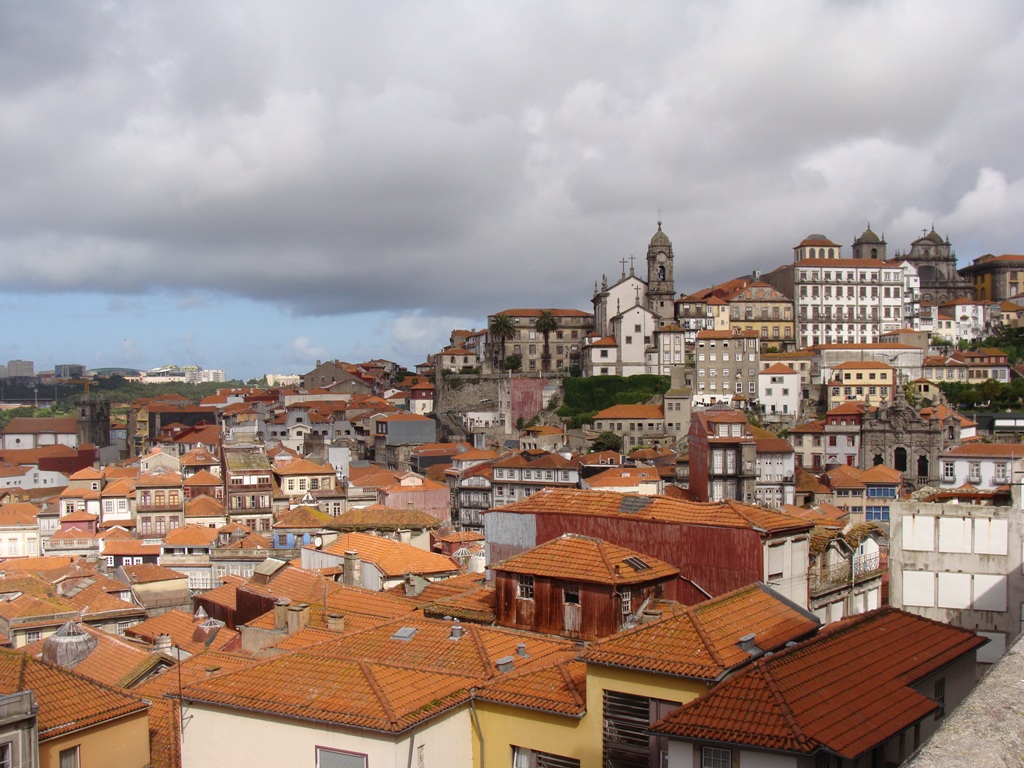
Porto, June 2012. La Ribeira from the Catedral da Se

A couple of weeks ago I flew to Porto in northern Portugal to catch up with some friends at the Optimus Primavera Festival, a first-time offshoot of the annual Barcelona event. It was my first time in Porto so I was really excited about exploring a new city and the surrounding countryside. European festivals don’t really get going ‘til late which meant plenty of time in the day to hang around and y’know, go birdwatching.

Having been woken early on my first morning by the incessant chatter of House Sparrows in the garden, I had the city much to myself for a bit. Drifting through the old town, it wasn’t long before I spotted a nice male Black Redstart mousing its way along the stone facade of the Museu de Arte Sacra e Arqueologia. As it flicked its tail and flew to a higher perch, it began singing its odd little song before finishing with that amazing static crackle at the end. It’s one of my favourite songs so great to hear it again. The song prompted a response from another male in the neighbourhood, on a rooftop somewhere above my head. Present in small numbers but seldom really seen around London and the south, I was struck by how relatively common they were here – living up to its reputation as a real urban bird.

The amazing Ponte de Dom Luis I bridge was a great vantage point for watching the large numbers of Lesser Black-backed gulls circling over the town. Peering down onto the overgrown gardens and ramshackle houses tripping over each other down the cliff side, Blackcaps and Wrens were noisily abundant along with the ever-present sparrows. Every roof and chimney top seemed to have a gull in residence too, many on nests. There is no doubt that gulls rule this town - thousands of them.
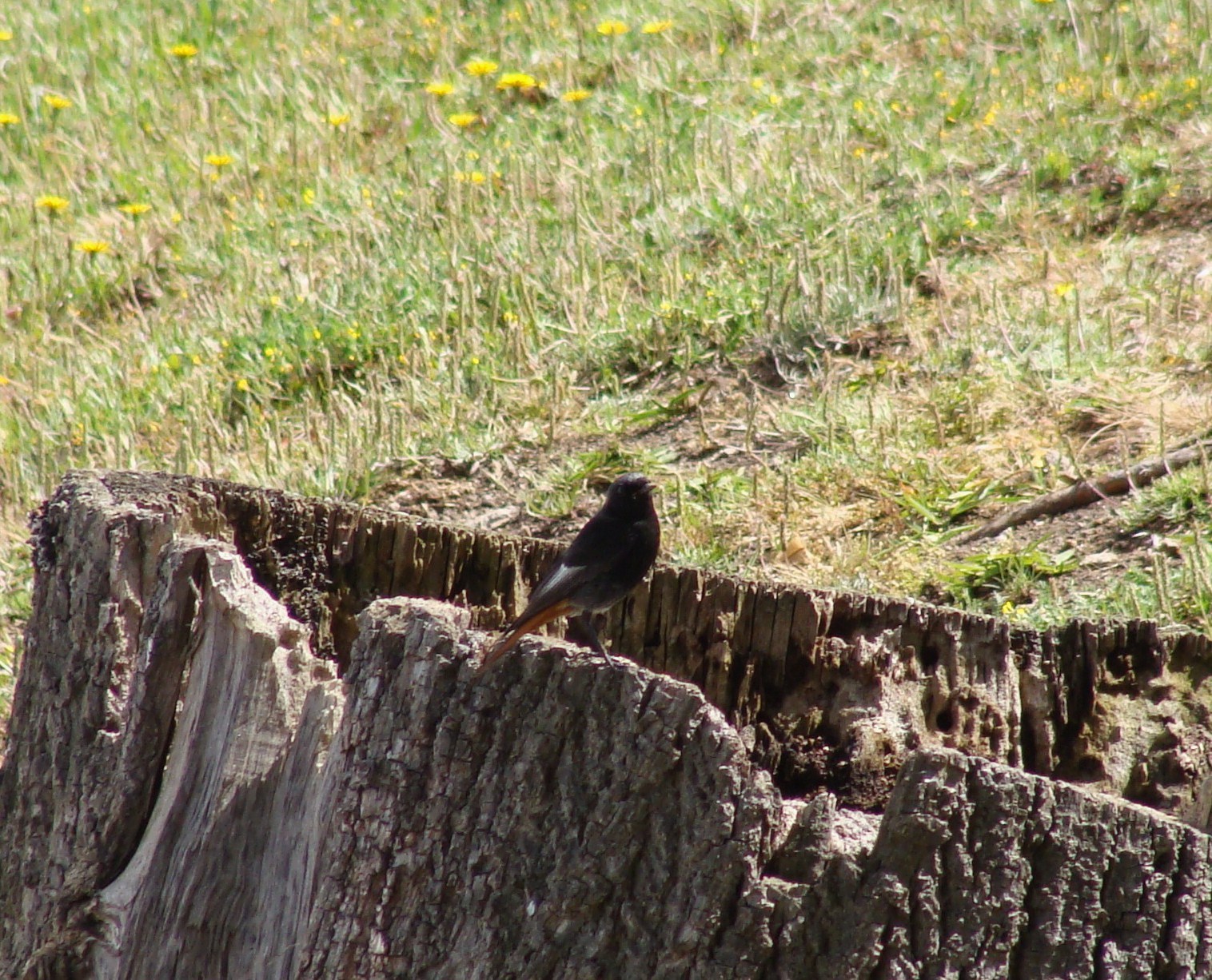
Black Redstart (Phoenicurus ochruros), Jardim do Morro, Vila Nova de Gaia (Porto) 8/6/12.
One of about ten I saw that day. This was in a small park and dropped right out of a tree next to me.
Lesser Black-backed Gull (Larus fuscus) with 2 chicks on a rooftop, Porto, 12/6/12.
From above I could see other pairs, some with chicks running up and down the roof gutters!

Across the river, towards the coast from Vila Nova de Gaia, I came to Afurada, a small fishing village at the mouth of the Douro. Walking along the quayside here I caught sight of a large bird pitching up off the exposed mudflats. With broad wings, dark colouration and a slightly forked/wedged tail, as it soared over my head I realised it was a Black Kite - lifer #1 of the trip! This was a really nice area and just past Afurada I found a little nature reserve between the beach and the estuary. The Reserva Natural Local do Estuario do Douro covers the last remaining tract of undisturbed estuarine and dune habitat in Porto. Free to enter and with board walks and hides, it was a great little spot. The tide was low but I could distantly tell Grey herons and a Little Egret in the shallows, the haze unfortunately obscuring some smaller waders present. Closer in, right by one of the hides I was distracted by an incessant ziit-ziit-ziit call coming from a patch of short grass. First of all I thought it was a loud insect but when a small bird flew up, circled in flight and landed on some reed stems I realised it was a warbler and one I hadn't seen before. Judging by the distinct call and some good views of its streaky plumage, I had a hunch it might be a Zitting Cisticola. I checked my guided later - it was. Adjacent to the reserve, a small, seemingly abandoned lot of gardens held a variety of hirundines, common warblers and a wheezy, rattling Serin. Although it was a breezy day, tucked into a patch of grass beneath a wall I also spotted a Clouded Yellow butterfly or a Pale Clouded, I'm not sure how you tell them apart? Either way, another first.


Reserva Natural Local do Estuario do Douro
This place was a great find, the sulky chap in the visitor centre didn't seem to agree though.
 'Blue headed' (Yellow) Wagtail (Motacilla flava) Dunes near Praia Estrela do Mar, 8/6/12.
A continental variant of  the UK migrant  flavissima Yellow Wagtails. I think this is ssp flava as opposed to ssp iberiae .
Black Kite (Milvus migrans) overhead. Estuary of Douro river, 8/6/12. Nice!
A male Stonechat (Saxicola torquatus) Garden/wasteground near Afurada, 8/6/12.
Clouded Yellow (Colias croceus) butterfly *I think*-
I'm not sure of the key ID pointers between this and the Pale Clouded Yellow
An utterly useless photograph of a Zitting Cisticola (Cisticola juncidis) - also known as Fan-tailed Warbler.

Parque du Cidade on the outskirts of Porto is another good spot for birds. The largest urban park in Portugal it also happened to be where the festival was held so I got to idly log a few more species while waiting for bands. There were a good range of habitats in the park with dense thickets of conifer and beech woodland, grassy areas and lakes. Hurrying through on the first day, on an unplanned detour, I didn’t get time to stop and scan for a Firecrest I heard singing but the usual parkland suspects were easily seen. On a side note it was a totally beautiful spot for a festival, with each stage largely surrounded by trees and the waves crashing on the beach a few hundred metres away. Sitting on the hill watching goodtime festival stalwarts Yo La Tengo wring some summery pop songs from their battered instruments, I secretly enjoyed watching clouds of Swifts tumble about the sky, Sand Martins skim over the heads of the crowd and a daring pair of Mallards make a sharp turn past the lighting rig.

On an unexpectedly wet and hungover Saturday I killed time in some record shops before getting the bus along to the grand Jardins do Palacio de Cristal. Perched high on the bluffs overlooking the river the views would’ve been great on a nice day but heavy mist and drizzle scuppered it this time. There were still birds around though and at one point a sudden flurry of high, peeping calls above my head resulted in excellent views of 3-4 Short-toed Treecreepers. Judging by appearance some looked like fledglings. I wasn’t sure to what extent the Short-toed range overlapped with that of the Eurasian Treecreeper but there was no doubting the clearly visible, pale notch on the wing bar of the these birds. Latter views also showed the shorter hindclaw from which it gets its name. As I left the park, a loud burst of drumming gave the game away for a Great Spotted Woodpecker.

From a birdlife point of view, I found Porto to be a really exciting city. It’s location on a bluff, sandwiched between the glittering Douro River and the frothing Atlantic Ocean means there are a wide variety of habitats within easy reach of the centre. Then there is the city itself which has its fair share of parks and squares, steep bundles of old apartment buildings and cavernous, ornate churches which are perfect for all kinds of nesting birds. As the tourist posters proudly proclaim, this certainly is a city with many, wait for it...oPORTOnities! Hope I can go again one day.

Sure I struggle to order a coffee, but at least I know my Mentos from my Grandes Cobertures

Tuesday, 19 June 2012

A birder's paradise

So I just got back from a memorable trip to Portugal and a route home that took me via France. You may or may not be surprised to know that I managed to squeeze in some birding along the way. I saw over a 100 species on my travels (not that I was counting or anything) and all  I can say is that if you don't enjoy looking at other people's holiday photos, you might want to switch over now and come back in three weeks. If you do, then you're probably in for a ball. Here's a little preview - I'm hoping to put the first post up by the end of the week.


PS the three birds in my previous post were Meadow Pipit, Sedge Warbler and a blurry Rock Pipit! 


Enjoy...


Greater Flamingo's (Phoenicopterus roseus) grazing in a lagoon near Lisbon, 12th June 2012


A majestic White Stork (Ciconia ciconia) snapped from a petrol station forecourt
on the A17 near Aveiro, 11th June 2012.

Sunday, 3 June 2012

Hen Harriers


I half wrote this post before the Buzzard stuff kicked off. That sort of took over for a bit, but I wanted to stick this up anyway since it's all related.

***
One day last November, I was sitting in the lounge of the farmhouse I shared with the other RSPB volunteers out on the north Kent marshes, when I became aware of a movement out of the corner of my eye; something outside the window. I turned to look, and there, about 5 metres away, separated by a pane of glass, was a female Hen Harrier, drifting over the hedge and across the garden towards me. It was an amazing experience, not least because it was the first I’d ever seen. The bird then glided up over the house and I raced round the front to the kitchen just in time for another good view as it disappeared across the yard, into the murk and the marshes beyond.  I saw Hen Harriers a couple more times over the winter, mostly quite unexpectedly; flushed from a reedbed one afternoon when I was checking water levels at Northward Hill, another that drifted by while I was counting waders on a Sheppey beach. What a bird! Those encounters rank among my favourite birding memories from last year.
***
In this part of the country (South East), Hen Harriers are mostly a winter bird, partial migrants and wintering ones from the continent. But elsewhere in the country, they are present all year. Some pairs up north, on the moors of northern England and Scotland even breed. Or they try to.

I was really gutted to read a few weeks ago this news article reporting on the shocking turn of events that has left this majestic Harrier on the verge of extinction as a breeding species in England. That fact is hard to take but it gets worse when you read the story behind it. A recent study showed that the most significant factor affecting breeding success of the species in England was continued persecution by those with grouse moor interests. Very simply - Hen Harriers prey on Red Grouse which is the main quarry of many shooting estates in northern England. Rather than accept this natural state of affairs, some landowners, who incidentally might describe their interests as ‘conservation’, are involved in the systematic destruction of the species. With this in mind it’s frustrating that Defra continually chose to bang on about the apparently thriving Buzzard population in some areas.

This is not a recent development either but has been going on since Hen Harrier numbers began to recover in the 1950s and 60s. The species is afforded high level protection status across both Britain and the EU and has been the subject of significant conservation efforts. In 2002, Natural England announced the Hen Harrier Recovery Project, designed to better understand and halt the plight of the remaining population. It focused on a known Harrier stronghold in the Forest of Bowland in Lancashire. However something isn’t quite right because as the article above points out, in 2012, surveys so far suggest just one breeding attempt by Hen Harriers in England. Not much a ‘recovery’ is it? 

A lot’s been written and said on the subject recently, in particular, on Mark Avery’s excellent blog.  He does such a good job of reporting the story and tying it together whilst being both passionate and even handed. I’d suggest making that your first point of call. Mark’s blog revealed that as part of the project and a soon to be published PhD thesis on the subject, a number of birds were tagged with satellite transmitters to monitor their movements. Now apparently of 119 birds tagged, only 1 is still transmitting a signal. That raises an obvious question - where did the others go? A Natural England report in 2008 pre-empted this, noting that “a number of birds, including six birds fitted with satellite transmitters have been tracked from the Bowland Fells into parts of the North Pennines managed principally as driven grouse moors, and have not been recorded subsequently”. I think natural mortality can be discounted. A technical fault? Hmm.

Mark’s blog also draws attention to this exchange in a Commons debate in May this year. It’s pretty interesting I think. The link is here, the Harrier stuff is about half way down.

Last year I had an opportunity to question Richard Benyon as part of an RSPB marine conservation ‘question time’ event in Westminster. The response I got to those questions reminds me of the answers he gives here  – slick and confident but ultimately rehearsed and totally lacking in specifics. Again, he doesn’t really answer the questions but he does reveal a couple of things. One thing that struck me was the 2012-13 financial commitment to this project: £32,138 (+ one full time member of staff + associated staff costs). Compare that with the £125k per year that Benyon’s department were willing to spend on the Buzzard trial. Certainly that 32k would rise with a staff wage but it still falls way short of the latter figure. I really don’t get it – this is the response to the potential loss of a native breeding species in England?? How much longer can a minister with a vested personal interest in grouse shooting be allowed to lead on this?

One of the main things that ‘Buzzardgate’ achieved was bringing Birds of Prey to national attention. That is a huge gift and a baton to run with. It has real potential to increase awareness and help secure a future for Hen Harriers and other birds of prey in England. So let’s keep it going. Let’s get some answers regarding the last whereabouts of the tagged harriers. Let’s push Vicarious Liability through and make landowners culpable for wildlife crime perpetrated by those in their employment. Let’s make the needs of grouse farming and harrier breeding compatible. It’s not easy but it can be done. It HAS to be done.

3 quick links:

2 Actions:

Hen Harrier chicks. Photo respectfully sourced from raptorpolitics.org


Friday, 1 June 2012

Buzzardgate 2012: Victory (sort of)


What a strange week it’s been. No doubt the main talking point has obviously been Defra’s proposal to manage Buzzard populations in some areas, followed by their subsequent retraction in the face of mounting public pressure on Wednesday (30th) I was quite surprised by the speed of their U-turn but equally so by the passionate response of so many different people and organisations to the original proposal. What a great demonstration of how much people care about our countryside and our native birds and are determined to be heard. While it’s undoubtedly the right decision and ‘we’ should be proud of what was achieved, how much of a victory is it really?

That this situation came to pass in the first place is a worrying sign of Defra’s fallibility especially when handling game industry lobbyists. In withdrawing the proposed trial Richard Benyon, Defra Minister, rightly acknowledges the need to understand raptor-game bird relationships better but still advocates new proposals on the issue. So for Buzzards in those areas where this is a ‘problem’ they can still expect to be the focus of unwanted attention to some degree. I’d like to see research done on the impact of pheasants on the wider environment for a start; that would be of far wider public interest.

But there is still something wilfully naive about all of this. He goes on to state that “the success of conservation measures has seen large increases in the numbers of buzzards and other birds of prey over the last two decades”. There is no doubt this is true but it’s a blinkered way of looking at the issue; it sounds like some rather arrogant reasoning. There have been successes and great work done on raptor conservation, but then we’ve also managed (by and large) to stop poisoning stuff and shooting things enough to allow a natural recovery. It’s like when you read the football stats after a game in the paper; ‘so and so had a 86% successful pass rate and 79% of shots on target’...but when you watched the game all those passes were really just 6 yard squares and those efforts at goal were pea rollers that dribbled into the keepers arms. But enough about Walcott; Benyon, as a grouse moor owner and keen shooter, is aware that there is gaping chasm in the way raptors are treated in this country. It’s not always apparent but it’s there.

One person who wasn’t pleased by the decision was Tim Bonner, campaign director for the Countryside Alliance (Tagline: 'Love the countryside'). In the papers yesterday he thought it was a “sensible and proportionate study” and felt “That the government has chosen to ignore rural people in favour of a large and vocal special interest group shows ministers are now willing to give in to whoever shouts the loudest”. Well rather that than whoever has the most cash eh? ‘Course he has to say all that, but what nonsense. It’s got nothing to do with this idea of 'town vs country'; perpetuating this myth does nothing to help matters and such attitudes represent one of the main stumbling blocks in UK conservation today. 

I’m really pleased that Defra made this call, no one likes admitting they were wrong (even though they haven’t really done that). Let’s hope there’s a lesson learned. If Defra are going to deliver on their impressive looking England Biodiversity Strategy for 2020 and give raptors the proper protection they deserve then we need to see more ambition and leadership than this. Sorry about random football analogy (and sorry Theo, not your fault manager plays you in wrong position) think I’m in withdrawl.

Good Indie article yesterday here

Sunday, 27 May 2012

Defra responds...

It's been amazing to see how quickly Defra's buzzard trial has ripped through the news outlets this week, seemingly propelled by an impressive tide of outage on some social media outlets. Given the kicking they've take on this one, the other afternoon they released their statement in the response. To follow up my last blog, here it is (from the website):


The Myth: 
There have been recent reports that Defra is proposing to cull buzzards or is about to implement a new policy to control their numbers. 
The Truth: 
Defra is absolutely not proposing to cull buzzards or any other raptors. 
We work on the basis of sound evidence.  This is why we want to find out the true extent of buzzards preying on young pheasants and how best to discourage birds that may cause damage to legitimate businesses.   This would be only in areas where there is a clear problem, using non-lethal methods including increasing protective cover for young pheasants with vegetation, diversionary feeding of buzzards, moving the birds elsewhere or destroying empty nests. The results of this scientific research will help guide our policy on this issue in the future. 
As the RSPB have said, the buzzard population has recovered wonderfully over the last few years, and we want to see this continue.

So what do you make of that?

It strikes me as pretty cursory response and releasing it in 'mythbusting' format seems a rather light-hearted means of regaining public face (if that was the intention)

Of  the 'myth', I haven't actually seen any articles that refer to a cull of buzzards but I suppose I could've missed that given the extensive coverage of the issue.

Of the 'truth', it claims, once again, that they are working 'on the basis of sound evidence' yet not apparently on the basis of rational thought, financial sensitivity or ecological understanding. It also mentions the damage caused to legitimate business. While there are no qualms here about the legitimacy of pheasant shoots, what they totally fail to address is that, aside from the wholly unnecessary and callous methods proposed of managing buzzards (captive removal and nest destruction), what's got most people riled is that taxpayers money is being used to boost the profits of private businesses (which are hardly in dire straits) They cannot seriously qualify spending this amount on economic grounds since the margins are minimal - how long would it take to recoup an investment of £375k? Livelihoods are not at stake and there is no benefit to the wider public at all. This is not how a government department tasked with protecting the environment, promoting an environmentally sustainable economy and good quality of life should be spending money. Perhaps they'd like to bust that myth?

Anyway, I'm sure we're all on the same page with this, no point banging on what's already been said elsewhere. I guess the issue will keep rumbling on and we'll just have to wait and see just how much this lives up to the claim of being 'scientific research'. Will it be the kind of scientific research that results in sound, progressive policy making? Or will it be the kind of 'scientific research' that whaling nations use to legalise the pointless slaughter of hundreds of cetaceans every year?

In the meantime though, it would be great if everyone who reads this blog signed this petition (if they haven't already) to Richard Benyon MP. And while you're at it, sign this one as well! Write a letter, go birdwatching...lets poke Defra out of their tree before they get started. Ha.

Wednesday, 23 May 2012

DEFRA Buzzard Trial: WTF?

Common Buzzard (Buteo buteo) soaring over the North Kent Marshes, August 2011

If you're reading this, you've proabably heard by now the shocking announcement this week that DEFRA has sanctioned a £375,000 trial to assess 'management techniques' that would reduce the apparently 'significant' effects of Common Buzzards on Pheasants reared and released by the Game industry. Based on some pretty dubious science, this absolutely mystifying decision has come about at the 'urgent' request of the National Gamekeeper's Organisation, who are presumably, about now, laughing themselves silly.

The trial is apparently a response to increasing Buzzard numbers in some areas resulting in pheasant numbers  being impacted; thus reducing the numbers available for lucrative shoots and impacting financial rewards. The most controversial aspect of the whole sorry deal is it proposes 'Nest Destruction' as one of the methods of displacing buzzards in the survey area: "destroying nests under construction, for example, using a squirrel drey-poking pole or shotgun from below thereby forcing  the pair to move on to find another nest site or not breed that year".

Please read about the details of the trial on the Raptor Persecution Scotland website here and see what you think. Here's the project specification according to DEFRA.

Re-reading the details, it seems more and more absurd each time. It is wrong on so many levels:

  • Common Buzzards, as a wild bird, are protected under the Wildlife and Countryside Act (1981). The same Act which which states "it is an offence under Section 1 (of the Wildlife and Countryside Act of 1981) to intentionally take, damage or destroy the nest of any wild bird while it is in use or being built"
  • Common Buzzards are a native species, pheasants were introduced in the UK predominantly for sport
  • They are a species recovering from persecution in many areas by some members of the game fraternity; the precise extent of that persecution, like that of other raptors, will probably never be known. That rise in number (146% between 1995-2009) is surely largely in part to them recovering ranges where they were previously extinct. Isn't it telling that since 2009 the increase has levelled off to a 0% change?
  • It is estimated that 40 MILLION pheasants are reared and released into the countryside by the Game industry every year. The DEFRA project spec states that "Buzzards are generalist feeders that respond to local variations in prey populations...It is claimed that individuals may target pheasant release pens if they learn that they can find a readily available food supply at them.  It is in these situations where they can come into conflict with game interests" - well then surely the problem lies with the management of the pheasant pens?!

What does this decision say about the influence of MONEY and lobbying on the government? In challenging economic circumstances, where jobs in the conservation sector are disappearing and money for projects has to be bloody scrapped for, HOW ON EARTH can they justify spending £375k of taxpayers money on this? Who benefits? I don't have a problem with people making a living off the land, or the game industry as a whole, but this is way off line.


The RSPB released their response today and pretty much nailed it, it's worth a read.

Love Buzzards? Hate stupid, wasteful, inefficient governance? Email Richard Benyon MP (DEFRA Minister) and let him know: 

richard.benyon.mp@parliament.uk

Hands off our Buzzards!

Sunday, 20 May 2012

Nightingale Survey 2012

On Friday morning I finished the Nightingale survey that I volunteered to do on behalf of the BTO. I’ve really enjoyed doing it; here’s some background about it and thoughts on how it went.

The last survey on this scale was carried out by the BTO in 1999. A lot has changed in 12-13 years; elsewhere in the countryside numbers of similarly iconic migrant birds such as Turtle Doves, Cuckoos Yellow Wagtails have plummeted. This survey will help determine how nightingales have fared since then, making 2012 an important year for this amazing bird.

Methodology

For the survey I was given two tetrads (or 2km x 2km squares) to cover on an area of the North Downs near my home in Kent. These were squares that had previously had nightingales recorded. The aim of the survey was to record the number of singing males in each tetrad. An additional important factor to consider was habitat. The BTO survey methodology stated that each site was to be paid a minimum of 2 visits, between 21st April and 14th May, between dawn and 8.30am in fair-good conditions. Any nightingale encounters were to be annotated CBC fashion (the standardised recording of a bird’s activity eg singing male, in flight, with nest material etc) on accompanying sample OS maps. Nightingale territories (likely nest sites with at least one male in song) were also required to be logged in a results table. Besides the two daytime visits, two nocturnal visits were suggested after 18th May, between midnight and 3am, on any squares which logged males in the daytime surveys, to locate any males still singing. The theory behind this is that any males singing at this time are likely to be non-breeders, or those without a mate. Interesting - presumably this distinction then gives a far more accurate overview of breeding populations. I was really hoping to get some birds on the daytime visit so I could go for a midnight ramble on the downs!

Survey

I visited each site a total of three times. I made an initial visit (as suggested) to refresh my memory, check out paths and habitats etc. These visits were worthwhile and revealed that both squares did contain suitable habitat but in varying amounts. I highlighted these areas on the map for later reference. The habitat assessment is important because nightingales are known to favour certain areas, particularly low, dense scrub with some bare ground and young growth woodlands/thickets with canopy cover. One square in particular looked really promising as it held a large disused quarry with steep sides and ample dense vegetation. I knew access would be impossible but reckoned I would be able to cover most of the perimeter from footpaths and some minor, well-intentioned trespassing.

For my two subsequent ‘daytime’ visits my approach was a simple one – looking and listening (hard!) Generally, each square had large areas that were clearly NOT suitable Nightingale habitats; arable fields, maturing Oak/Ash woodlands with little understorey and to these I paid little more than cursory ‘birdwatching’ attention. Instead I focused on the ‘key’ areas, spending as much time as necessary walking, stumbling and just standing still to listen. By and large, each visit took around an hour and a half. One major downside of the visits was the weather. I know it’s largely been the same everywhere but the conditions were not really favourable. I didn’t have the luxury of picking and choosing days, I was limited to a few and had to take the best I could. It rained to some degree on 2/4 visits and on all bar one, the conditions were cool, overcast with some breeze – not great for singing birds! I was thankful of the decision to extend the survey period by several days.

A view from the Downs looking South East towards Holborough and Snodland.
Much of tetrad incorporated arabale fields like this - an unsuitable habitat for nightingales

Young trees, scrub and brambles - a much better example of Nightingale habitat...
...but access was difficult.
Results

So what did I find?

Well, for all those lost hours under a duvet, all those miles walked and all those hopes raised, unfortunately neither square recorded a single Nightingale. There was a smattering of Yellowhammer, Lesser Whitethroat and Willow Warbler but not quite what I was looking for. It’s disappointing, however I think it’s worth noting two things. The first is that just because I didn’t find any, it doesn’t mean definitively that nightingales are not present. There are a number of variable factors to consider, including the weather, which hardly helped. Secondly, the result is still statistically significant. Simply put – there are no nightingales where there used to be. Once submitted that will play a part in establishing the local, regional and national trend.

When the results from all the tetrads are in, the BTO will be able to analyse the data and gain some understanding of the abundance, distribution and habitat preferences of nightingales in the UK in 2012. Having swapped notes with other volunteers in the area, the first indication is that sadly, my result is in-keeping with the general trend for our patch of the North Downs. National results will follow but this raises the question that why, if nightingales were present here in 1999 or thereabouts, they aren’t here now?

Assuming there is a local decline, the challenge will be looking into to the causes behind it. Are fewer nightingales returning to Kent because of conditions in their sub-saharan wintering grounds or through the hazards of their 5000km annual migration? Or is the problem closer to home, in their breeding grounds of southern England? Is it a combination of all these factors?

Once they leave our shores in the summer, the fate of the birds is still relatively unknown. This is the focus for long term research that may yield crucial answers. Closer to home though, attention must focus on conditions in our countryside.

  • The practice of coppicing which traditionally took place across the Downs has virtually ceased in the last few decades (although I’ve read that it is returning in places). This activity, whereby trees are cut to a stump and routinely harvested on rotation across a number of years, was responsible for creating the kind of dense young growth habitat favoured by nightingales. As coppicing has declined, many coupes and woodlands have suffered a loss of biodiversity, largely through excessive canopy shading. With little light reaching the floor, shrubs and brambles are outcompeted resulting in a limited variety of structure. The decline of traditional woodland management also extends into that of farmland and hedgerows.
  • Similarly climatic changes may be affecting nightingale populations in the area. Despite a wet spring in 2012, this was preceded by drought warnings and exceptionally dry seasons in previous years. For a bird that has traditionally shown preference to habitats near water bodies, a contracting range may be a result of this. The Hoo Peninsular in Kent, an area which meets this requirement in places, appears to be a particular stronghold for the species.
  • More recent studies have looked at the impact of deer browsing, particularly Muntjac deer, on woodland bird species. This seems to an increasingly important factor in places although I’m not aware of that being a problem in this particular area.

From the first visit, my general feeling was that I would be unlikely to find any nightingales. That was based on my own basic knowledge and experiences of them. Still, I really enjoyed the surveys; a dawn ramble across the gentle chalk ridges and fields of the North Downs is hardly a wasted moment. Whatever the outcome of this survey, we’ll be in a stronger position for knowing – and in time, perhaps we’ll be able to address the changes and allow this iconic bird and its wonderful song to once more become a feature of springtime walks on the North Downs.


Read more about the survey here

Above sound clip recorded on my phone at RSPB Northward Hill, Hoo, Kent, 27th April 2012 

Thank you to Andre Farrar for his comment via Twitter