Cooling Marshes, Kent, 7th December 2014
Showing posts with label Scotland. Show all posts

Thursday, 24 July 2014

Howlin' Fling! Isle of Eigg, July 2014


It seems that barely a month passes these days without me visiting some achingly beautiful corner of Scotland, this was my fourth trip in under a year; how I've grown used to the unnerving jolts of sleeper carriages in the night and the efficient hum of CalMacs. So it was this weekend as myself and a few others headed north once more, this time to the majestic Isle of Eigg, nestled between Rum and Mull on the west coast. Unlike previous trips, wildlife or wilderness was not the driving factor here, in fact 'FUN' (and therefore not necessarily birding) was the party line I was given before we left, rather it was the promise of seeing some great bands, drinking, dancing and generally having an amazing time - all courtesy of the great folk behind (Eigg-based) Scottish independent record label Lost Map Records and the 3rd 'Away Game' mini-fest, this time out christened 'Howlin' Fling'.

And have an amazing time we did. Of course I still found time to explore the island and my surroundings, anything less would be plain foolish. I found Eigg to be a charming place and had a great time birding its heathery slopes and rocky shores between splendid bouts of gaelic rap, glorious noise, swooning, drinking and yes, howling.

Meeting the aptly named Shearwater from the train in Arisaig harbour on Thursday, the hour-long crossing to Eigg bought a scattering of seabirds including singles of Kittiwake, Puffin, Gannet and two Razorbill, while the rocks around around Arisaig harbour hosted numerous common seals. An interesting mid-channel sighting was of a small flock of Golden plovers that arced low past the boat and off to the south west. Nearing the small jetty at Galmisdale, Black guillemots were fairly conspicuous and a few Eider nursed young in the shallow and muddy inner harbour.

Pitching our tents on a low, grassy headland a short walk from the harbour afforded nice views of the Sound where several dozen Arctic terns from a nearby colony squawked and swooped endlessly during our stay. A pair of hooded crows kept an ever watchful eye on the pretty harbour and more than once I heard common sandpipers shrieking somewhere nearby. With the sun out and the music not kicking off until the Friday, we took a walk along the cliffs to the west and a path that led to the Massacre Cave. It was nice to find a single Grayling butterfly here, a species that is largely absent from my local area. Meadow pipits called throughout and a few crossbills and Spotted flycatchers flicked around the pine woods lining the path from the 'village'. Near the cave was a single juvenile Wheatear and a small flock of rock doves. The cave itself was spectacularly eerie, requiring some agile shuffling on knees to access, with the darkness inside lending weight to its reportedly tragic history. But it is a GREAT name for a metal band at least.

With no metal in sight sadly, the Thursday night headline slot was seized by a pod of common dolphins that swam into the small channel by the pier and gave incredible views to those assembled on the little terrace of the tea room/bar overlooking it. They swam and breached down to 20m at times, causing a little crowd to gather in appreciation on the rocks - undoubtedly the best views I've ever had.

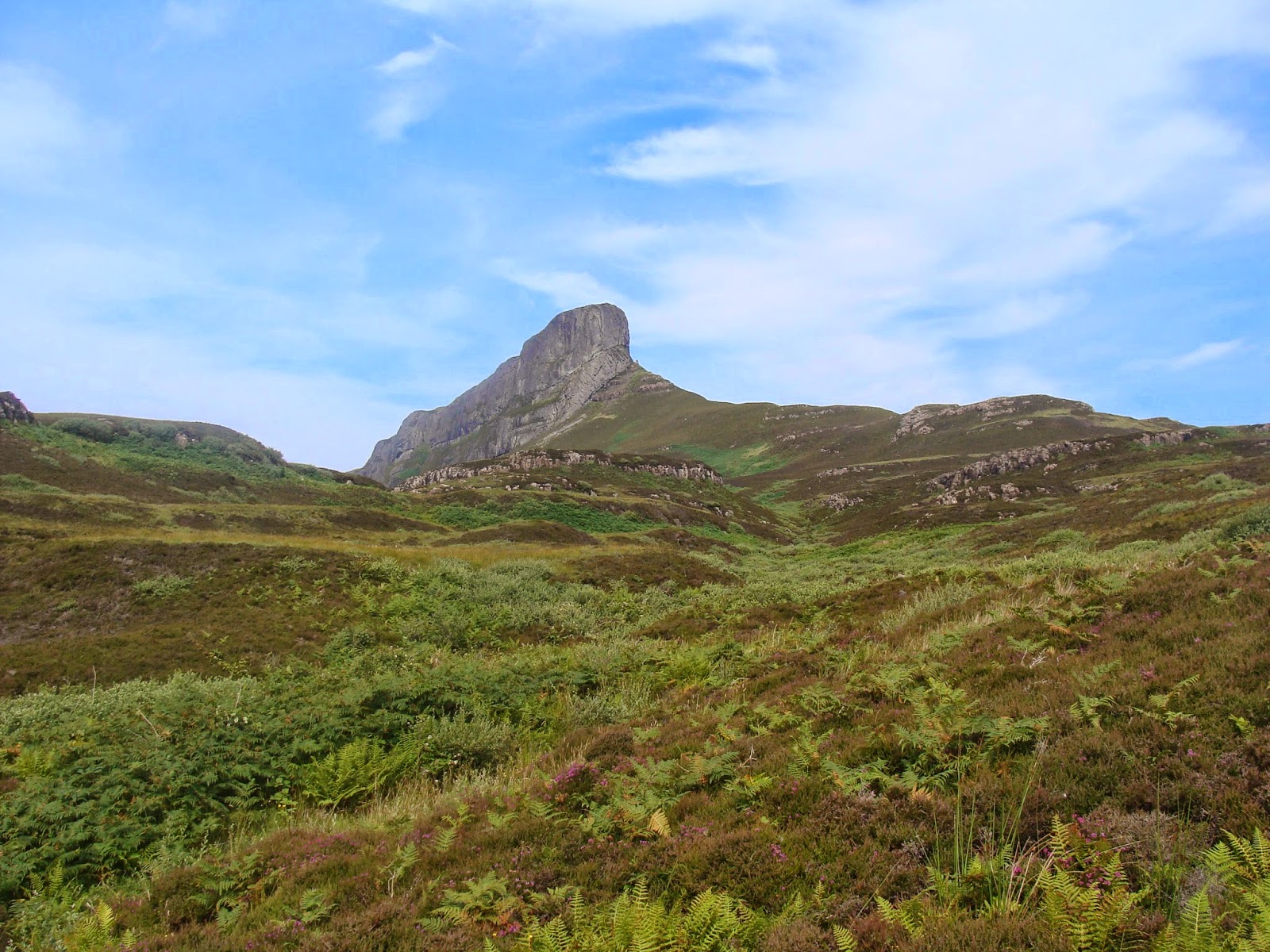
Friday started with an hour watching the sound from the new harbour wall with Manx shearwaters in mind. Happily it paid off and, although distant, the distinct low, gliding flight pattern revealed a steady passage of birds and some small flocks gathered on the water. Following breakfast, an assault on the imposing peak of An Sgurr that towers over the island like a sinister basalt dorsal fin was planned and we headed up the steep path to the accompaniment of Ravens kronking overhead. They lurked at the top too as we ate a victorious picnic, gawped at the incredible view, played 'Name that Island' and took selfies (naturally). But aside from the view, the morning belonged to a ringtail Hen Harrier that gave good views as it cruised over a nearby slope. To see these stunning birds on a bleak marsh in winter is special but to see them glide over purple-studded heather on a summer's day in a landscape as right as this is breathtaking.

With some great birds on show, it was perhaps fitting that the lines were blurred somewhat when it came to the festival line up. This is why I spent an hour or so on Saturday watching a Woodpigeon duel it out with a parliament of eagleowls - with the result being closer than you might expect. Then there was an encounter with a WOLF too which wasn't actually the least bit frightening, in fact it was kind of beautiful. It's testament to the organisers' vision and good taste that every band I saw bought something to the weekend and contributed to the spirited atmosphere with simply great performances. Sorry to go a bit Buzzfeed but off the top of my head stand outs included - Sam Amidon, Johnnie Common, The Pictish Trail, Meursault, SeaZoo, Jens Lekman, local band Metta and the two guys playing in the Ceilidh Hall on Sunday afternoon that we we stamped and clapped along too. Look them up. This is how music festivals should be done.

Then all too soon it was time to leave again. There was just time on Monday to cycle down to the beautiful singing sands at the other end of the island where a couple of Whinchats hopped among the scrubby croft margins and some kestrels bounced on clifftop gusts. On a high ledge on the shear rock cliff that surrounded us I'm sure I saw a Golden Eagle alight briefly too. Packed into the Shearwater for the return trip there was a heartwarming cheer for the organisers and residents waving us off before we crossed back to Arisaig. The water was flat calm under the hot sun and quiet as a result but still a couple of harbour porpoises appeared briefly and two superb Great skuas pitched off the glassy sea and flew past. I thought that would be it for the trip but there was one more highlight to come. Sitting sleepily on the train, not far out of Arisaig, I perked up momentarily as the train veered into the open and ran adjacent to a large loch. It was just in time to see a summer-plumaged Black-throated Diver sat on the water! What a beast. It was a blink and miss it moment and it felt quite surreal, but it was a great way to end a fantastic few days.

Campsite, Eigg, 17/7/14

An Sgurr, Eigg, 18/7/14

Dolphins! Come on! Galmisdale, Eigg, 17/7/14


And some footage with bonus great commentary (!):


Dolphin crowd

Meursault in the Marquee - f'in Yes! Eigg, 20/7/14

An Eagleowl takes flight - nearly. 

Whinchat (Saxicola rubetra) at Cleadale, Eigg, 21/7/14

Awesome beetle in the grass by our tent - ID  suggestions welcome

Rum rising - from the Singing Sands, Eigg, 21/7/14


Thanks to Johnny and everyone. KS, sorry for stealing your joke :)

Friday, 30 May 2014

Postcards from the Outer Hebrides, May 2014


"It's easy to be lulled by the harsh poetry of the crofters' lifestyle, the community's lilting dialect, their love of music and the aesthetic possibilities of spun wool..." 

Mark Cocker, 'Birders - Tales of a Tribe'

It's never much fun coming home from holiday is it? The last few days have certainly been a struggle, rushed from the relative calm of Inverness, via the Caledonian Sleeper, to a Euston station morning rush hour. But it was my decision to head straight back to work with minimal sleep so I have no one else to blame. London is a long way from the Outer Hebrides but it seems even further away now after the ten fantastic days we had hopping through the islands recently.

Travelling south - north, from Barra and Vatersay to Tarbert on Harris, via the Uists and Berneray, revealed a series of fascinating islands, each steeped in history and spoiled with some of the most mesmerising wild landscapes I have ever seen. Mountain, dune and machair, at times they seemed just strides apart. And the Beaches, the white sand and turquoise waters - imagine an overcast day in Thailand with ringed plovers where the tourists would be and 30mph winds perhaps. Glorious in other words.

Of course the birds were great too and a steady diet of MaCleans macaroni pies meant I explored a lot and had some memorable encounters along the way. Unfortunately those encounters did not stretch to the Snowy Owl at Solas as I got the news too late, but you can't win 'em all. We did eventually pass that way, but only to meet with the worst of the trip's weather which was otherwise pretty good. It's hard to find a Snowy Owl when you can barely stand for the wind and can taste the sand in your mouth. We did manage to see, eventually, another Hebridean speciality though. Hearing that 'crex crex' sound for the first time in an overgrown front garden on Barra was a nice moment - that sound belonging to a Corncrake, less a bird, more a jarring 'song' wrapped in a riddle. That noise followed us places, unseen, until the last day when we got lucky and passed a garden from which a bird flew up briefly then disappeared, looking as surprised as I was. Looking at the map of the Corncrake's rapid and systematic decline across the British Isles on the wall in the Balranald RSPB visitor centre was as stark and sad reminder as there could be of the importance of mending our ways with our landscape. Other highlights included numerous Golden eagles, especially around Harris, Short-eared Owl, Twite, ubiquitous Arctic terns and the acrobatic (and brilliantly close) Arctic skuas chasing them. It was great to see large numbers of dunlin and ringed plovers on their breeding grounds for a change, instead of a Kentish mudflat shrouded in winter mist. Likewise, it was interesting how relatively commonplace cuckoos were, with willow warblers topping the charts for migrant passerines.

All in all, it was an amazing trip and thoroughly recommended. I look forward to going back one day, but for now, here are a few photographs...


If there's one thing better than the scallops and chips from the fish bar on the main street in Oban, it's the confiding black guillemots (Cepphus grylle) in the harbour...


The chapel at Howmore, South Uist. We stayed in a traditional 'blackhouse', now a small bunkhouse, just to the left. The machair teemed with bird life and the sounds of drumming snipe at dusk confused some of the other guests!


Well you've gotta move your cattle somehow - photo taken from the back of the Royal Mail Post Bus no less. We saw a LOT of post boxes on this trip.


More usually seen in drab winter plumage on in-land gravel pits and reservoirs in the south, a summer-plumaged Great Northern Diver (Gavia immer) is an all-together different beast. A velvet-black head and a back that could be marked with constellations, they were a common sight from the beaches.


I had never heard a Wheatear (Oenanthe oenanthe) sing before this trip. Front of the queue in the looks department but late for a song, it was nevertheless nice to hear the quiet, Stonechat-esque warbles trickling down the hillsides.


Peat cutting by Loch Druidibeg, South Uist.


Traigh Lar at Balranald RSPB, North Uist.


Somewhere on Berneray - the smallest island we visited but one of my favourites.


The sheep of North Uist have voted.


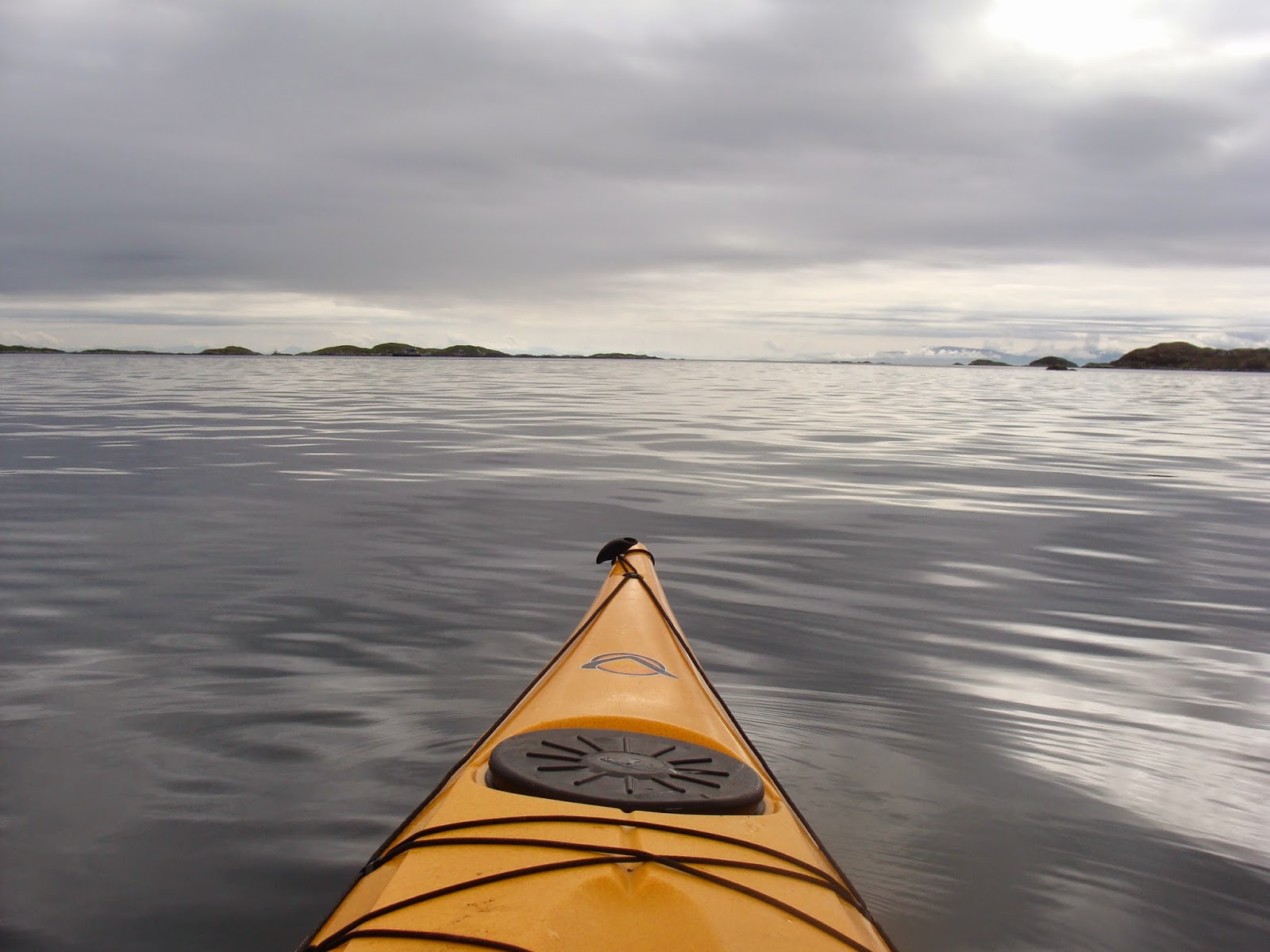
Kayaking on the flat calm bays of East Harris - not far from Loch Needletail (where respects were duly paid)


Arctic skuas chasing terns at Luskantyre beach, Harris.


Tuesday, 25 March 2014

The Cairngorms, March 2014


It's hard to describe what a stunning place the Cairngorms are, a simply magnificent wilderness of mountains, forests and lochs stretching as far as the eye can see. I've wanted to go for some time and last week I finally made it, taking the sleeper train after work on Wednesday and returning on Sunday night. Despite sore knees and blisters, it was a superb few days with some great walks and memorable birding.

The birds were hard won (mostly) with cold winds and frequent snow showers making it hard going at times, but I managed to see 4/5 of my trip ‘targets’. On the way down from Inverness I stopped for that most Scottish of specialities - American Coot at Loch Flemington, which I found after a bit of trial and error navigating. And there’s not much more to add really, a Lifer but whatever way you look at it, a Coot is a Coot is a...


American Coot (Fulica americana) Loch Flemington, Invernesshire 20/3/14

A scenic drive down to Grantown via Nairn bought the first of many Red Grouse as well as Curlews over the moors. Stopping in Abernethy Forest on the first afternoon I also picked up my one (and only) Crested Tit high in a pine along a track near Loch Mallachie. After finding my hostel for the night in Aviemore, I took a walk up to the peak overlooking the town through Craigellachie NR. A steep climb here through a bare woodland of twisted trees, heavy with bushy lichens, brought a large flock of 90+ siskins and redpolls, before my arrival at the top was greeted with the first of many snow flurries. However, a Peregrine calling above me on the descent, capped a good day.

Staying at the bunkhouse in Aviemore, the next morning I was up at 4.45am and back in Abernethy just after 6 to look for Capercaille. Finding my way to Forest Lodge in the dawn gloom was interesting, but the walk that morning was immense as I watched the sun rise and the snow fall over the forest. After several hours I had no luck with capers, despite following some good looking paths on my OS. But revelling in my surroundings, I continued walking on a track for about 90 minutes out to the mountain bothy at Ryvoan Pass. I waited here a while and it wasn't long before grouse began making their presence known. I was soon able to pick out three Black grouse amongst a dozen or more Red grouse. Against stony skies it was trickier to separate them in flight than I imagined but there was no doubting when I flushed a gorgeous male bird near the path on my way back and it arced beautifully past me in the warm morning light.

The circular route I took back towards Abernethy was largely quiet save for a single crossbill flying over and a Dipper that flashed past me on a stream, but it was livened up by the odd bit of improvisation required, including some agile shimmying across a fallen tree to cross a deep ford!

After the glorious start I decided to head up to Cairn Gorm to see what conditions were like. With a strong, icy wind across the base car park and the distant top station largely shrouded in cloud, a walk up didn't seem too promising but I headed up anyway picking a trail from the back of the visitor centre that took me closest to the most immediate, eastern ridge. It looked like the most obvious place any birds on the mountain would try and shelter out of the way of the westerlies blasting through. It wasn't long before I realised how tough the wind was when I spotted something swirling way out to my left. At first glance I cursed the fool who had let a plastic bag go here but getting my bins on it I could see it was an OS map disappearing into the distance, worse still, it was my OS map ripped right out of my rucksack pocket! Stumbling on, I pondered heading back and waiting a bit, but with the wind behind me decided against facing it. It proved to be a good decision as just a few steps further I spotted more movement out of the corner of my eye. I think already knew what it was before I turned completely and yep, I did so in time to see a Ptarmigan fly in land about 30ft away (see yesterday's post)! I fumbled briefly for my soaked bins but didn’t really need them as it paused for a moment and looked at me. Moments later it pitched up and flew further downhill past me, another bird appearing with it too. It was an awesome moment! This had been the bird I probably wanted to see here most of all and the weather and surroundings added up to an exhilarating birding experience. After that the walk wasn't so bad (!) and I even managed to find a flock of 20-odd Snow buntings a bit further up. It’s simply amazing how birds like these adapt to their conditions and it was a privilege to be a fleeting visitor in their domain.

Abernethy sunrise
Farmstead at Rynettin, Abernethy
Cairn Gorm
The toughest postal route in Britain
Snow buntings (Plectrophenax nivalis) (centre)

As for the rest of the trip, I was pleased to find three Whooper swans in a flooded roadside field south of Aviemore, the same day I found a flock of 20+ Bewick’s swans at dusk on a loch. Loch Garten gave up Goosander as I looked for an early Osprey (with no luck) but another highlight came early on Saturday as I walked by one of the large lochs. Scanning the water I picked out two distant shapes which turned out to be Red-throated Divers. As I watched, the birds began displaying and calling with bewitching groans and wails filling the air. It was really something, the first time I've experienced divers on their breeding grounds. I went back the next morning and they were there again, that haunting sound filling the valley behind me.


On Saturday, my planned walk up into the Lahrig Guhru pass was aborted by the weather, although I managed to get as far as the Chalamain Gap and the knee-busting walk through the boulders that fill it. But after that I decided to stick to low ground and, starting near Tullochogruhe, walked the six mile track out to the Loch Einich through Glen Einach (Gleann Einich). It turned out to be an amazing afternoon and while I could count the birds I saw on one hand, the landscape was breathtaking. The path followed a river winding its way along the edge of Rothiemurcus Forest and into the moorland where it left the trees behind. Here, the land opened out into a vast, wide glen and the path mirrored the river meandering across its floodplain. I expected the loch would eventually slither into view ahead but it never did and it seemed like it was not going to give itself away so easily. I ploughed on and eventually, after two and half hours, reached Loch Einich. It’s a spectacular place. Surrounded on three sides by sheer, grey, snow-capped crags, it sits in a perfect glacial valley that could have been carved by a giant ice cream scoop. The remoteness was striking and the silence so utterly pure, pierced only by whistling wind, water on stone and the sudden alarm call from a pair of dippers. The walk back didn't feel any shorter and I winced through the last mile, but it was undoubtedly an afternoon to cherish and one of the most memorable walks I've ever done. Unfortunately reality was fractured somewhat by hearing the Arsenal result later that evening, with that in mind; a remote mountain was a good place to be.

Feeling pretty tired on Sunday, I decided to visit Insh Marshes RSPB before heading back to Inverness via the Findhorn Valley and hopefully, some Slavonian grebes at Loch Ruthven. It feels like I've already used the word ‘spectacular’ too many times, but needless to say it could easily extend to all these. Findhorn produced Kestrel, Raven, Common Buzzard and best of all, a ringtail Hen Harrier that patrolled the ancient floodplain margins. The RPSB reserve at Loch Ruthven failed to turn up any Slavonian grebes but was a beautiful spot to end the day. The final action of the trip went to a skein of Pink-footed geese flying over, westwards, probably thinking it was time to head home.

Loch Einich
Loch Ruthven
Curlew in the Findhorn Valley
A wilderness
With thanks to Dan, Eleanor, Tony and Cory Jones for the tips!

Friday, 20 September 2013

The Eagle Isle


As an island, Mull is largely defined by the presence of water, and water was a recurring theme on my first visit there last weekend. It smeared glasses, closed roads and seeped into socks, but it never once dampened an amazing trip. The plan was to spend a couple of days walking, cycling and visiting some of the islands but it was quickly apparent that the latter two at least would be foolhardy. But after pouring over the maps and hiring a car, we were soon able to explore the island and its stunning wildlife.

It started off fair and easy, with a millpond crossing of the Lorn on a CalMac ferry that was heaving with Iona daytrippers. From a spot on the side deck I was soon able to pick out the distant shape of a Black Guillemot in streaky-white winter plumage in the outer reaches of Oban's sheltered harbour. A flash of its wings lending a hand. Gulls loafed here and there, Herring mostly with a few commons, while further out some juvenile Kittiwakes appeared. The highlight of the crossing were two Harbour Porpoises that surfaced briefly alongside us before disappearing beneath the bow waves.

The journey north from Craignure was via the unlikely form of a an open-topped double decker that took us headlong into a cool mist, past Salen where Grey seals were hauled out on the rocks. And so we arrived in the pretty village of Tobermory, with its picture postcard harbour front and smell of whisky on the breeze - just as it should be in places like this. 

Using the excellent Cicerone walking guide to Mull, a path out beyond the last building on the far side of Tobermory harbour led along a wooded hillside to the Rubha nan Gall lighthouse. Coal Tit and Goldcrest foraged along the way while numerous Rock pipits poked about on the grass covered rocks. Offshore a lone Guillemot croaked its call and the odd Gannet soared past. North of Rubha nan Gall is 'Bloody Bay' - so called from a clan battle in 1480 which it is said saw the sea turn red. Apparently, it this event that the author Jim Crumley describes gave the Oystercatcher its red legs and bill, on account of those that waded along the shore that day. There's no blood now that I can see but I wondered if the Raven tumbling about a distant cliff edge knew something else.

Following a night of rain, on Sunday morning the streams were crashing down, including the Tobermory River which shot a spectacular torrent of white water into the harbour. Watching from the side, the gulls were nae bothered but I was in the right place at the right time to see two Dippers darting about on the rocks, at one point landing just a few metres away.

Setting off  for Calgary Bay, the weather changed every 20 minutes or so. During a sunny respite alongside Loch na Keal, a female Red-breasted Merganser drifted close to the shore and, following a tip-off, we spotted an Otter on the rocks right in front us - something we nearly missed! It was brief but great to see. Scoping the loch, a flock of four more mergansers flew past in the distance and ten+ Greylag geese were perhaps the real deal arriving for winter, unlike the zombie geese I see in London. The winding road to Calgary was interrupted by diversions caused by flooding so it was no surprise that the white sandy bay we eventually arrived at resembled a war zone. Still, wildly beautiful, the beach was strewn with seaweed and scattered stones with a single Redshank making the best of it all. Tucked behind a clump of marram grass was a dead Gannet, washed up sometime ago. In a flooded field across the road, oystercatchers probed and pottered along with several Curlew; despite the drizzle, swallows constantly swooped about.

Rubha nan Gall, near Tobermory, 14/9/13
Dippers (Cinclus cinclus) in Tobermory harbour, 15/9/13
Hooded Crow (Corvus cornix)
Common Buzzard (Buteo buteo) hanging out, Loch na Keal, Mull

Later that afternoon, as the winds dropped and the sun shone meekly, we stopped for a walk through the pines at a Forestry Commission site just off the main road. From the rutted track coal tits were ever-present while a flock of 7-8 Crossbill overhead was nice to see. Our arrival back at the car was well-timed as the next front swept in and decided the sun had its day. But as the sky darkened to breaking I caught a pale jolt in the glooming periphery of the hillside below; slowly jinking it's way across the field was a male Hen Harrier, pearly grey with ink-dipped wings. Then the rain became hail and it disappeared from view. I always love to see this bird, a supreme bird of this land. In fact, over the course of the weekend, I saw more hen harriers (seven) than I did chaffinches (four); maybe this says a lot about the kind of place Mull is and the kind of place others are sadly not. 

Although the hills and mountains remained shrouded in mist, Monday was calmer and we went for a walk on Loch Ba. Being less exposed I thought it might provide some shelter and also be the kind of place eagles might be forced down to in poor weather. Thankfully, most of that proved to be true. 

Loch Ba is a beautiful spot, surrounded by steep mountain sides with streams and waterfalls flowing from the summits like jagged veins down to the loch at its heart. Following the gravel track along the water, we passed through thin strands of Oak, Willow and Ash, pale bushy lichens clinging to their twisted trunks and branches. Somewhere near the middle of the loch, we walked across a soft, grassy area guarded by a fly fisherman in the distance. Crossing here, we flushed a flock of small birds into the air nearby. They called incessantly and Linnet crossed my mind, but straight away I felt the calls were subtly different from what I expected. As I moved closer to the birds low in the grass by an old cattle feeding station I was as sure as can be that I was looking at my first flock of Twite. I hadn't been sure I would see them here so that was a real bonus.

The form continued as a short way further along the track I picked out a large raptor coming off the mountainside to our right. Getting on it there was no doubt that it was a Golden Eagle and coming head on towards us too! We watched as it descended into a low copse ahead of us for a few minutes, presumably for shelter, before it took off again, banking high to the right. As it did so, it succeeded in flushing a Hen Harrier from a lower slope and for a few moments I was able to enjoy both majestic birds in the same binocular view.

I guess anyone visiting Mull hopes for a glimpse of possibly their most famous residents and I was no different. Further on up the track, near where the loch tapered to a thin beach, I saw movement over the water to the left. My first thought was that it was probably a Grey Heron crossing the loch but when I raised my bins I realised I was looking at my first White-tailed Sea Eagle - an adult and an immense beast of a bird! It moved past us, perhaps a hundred metres off over the loch, battling the headwind with all the power of the feathery doors strapped to its back. A minute or so later it was lost to the murk but what a privilege it was to see.

Before heading back we left the loch for a while and followed the path up the glen. A victory lunch of Irn Bru and Skips was had in a ruined farmstead where the tall crags of Glen Cachaig peered over the crumbling walls at us.

The track from Knock to Loch Ba, Mull
The mists rolling in
Bam...
Bam...
Boom. White-tailed Sea Eagle (Haliaeetus albicilla) Loch Ba, Mull, 16/9/13.

What a fantastic few days. Leaving the next afternoon after a tour of the distillery and a complimentary dram, we could only laugh as the sun came out as soon as we bordered the ferry home. 


Mull Trip List, 14th-17th Sept 2013:

Herring Gull, Black Guillemot, Kittiwake, Shag, Cormorant, Common Gull, Pied Wagtail, Hooded Crow, Black-headed Gull, Great Black-backed Gull, Grey Heron, Lesser Black-backed Gull, Blue Tit, Coal Tit, Feral Pigeon, Robin, Wren, Goldcrest, Rock Pipit, Raven, Gannet, Guillemot, Treecreeper, Chaffinch, House Sparrow, Dipper, Common Buzzard, Greylag Goose, Mute Swan, Mistle Thrush, Red-breasted Merganser, Curlew, Stonechat, Dunnock, Common Whitethroat, Kestrel, Oystercatcher, Redshank, Swallow, Meadow Pipit, Grey Wagtail, Common Crossbill, Hen Harrier, Mallard, Twite, Golden Eagle, White-tailed Sea Eagle, Lapwing, Skylark, Goldfinch, Starling.

Thanks to everyone who gave me tips on Mull beforehand - the good folk of twitter and particularly Kev Parr (and Martin S) Cheers!

Recommended Links: