Cooling Marshes, Kent, 7th December 2014
Showing posts with label Travel. Show all posts

Tuesday, 10 March 2015

The Grenadines & Dominica, Jan 2015

Looking North to Union Islamd from Carricou, Jan 2015

This is the second part of my Caribbean trip write up from January this year, a little later than planned but such is life. It all feels like a dream now.

Following Grenada our trail took us north via the Osprey ferry to Carriacou, a small and exceedingly relaxed island. Brown pelicans greeted us in the small harbour where royal terns flickered over the gentle surf. A quiet walk around the northern tip of the island that afternoon resulted in good views of a mangrove cuckoo in amongst the dense, wiry stands of coastal scrub. From a secluded beach, little more than a thread of white sand between the mangroves and the sea we could see the islands of Petit Martinique, Petit St Vincent and Union, the path between them dotted with reefs and several shipwrecks. The next afternoon, our own journey to Union Island was underway, albeit with a delay due to the small cargo vessel that agreed to take us suffering engine trouble. Eventually we set off, crossing the sea (and the international border between Grenada and St Vincent and the Grenadines) as the sun set, a deckhand using the trip to catch two barracuda from the back of the boat.


My short experience of Union was a pleasantly odd one. Arriving at dark and stateless from our delayed border crossing we were bundled into a van and off to the airfield's 'immigration department'. En route the driver proudly showed us his pet iguana, held in one hand while the other prodded the steering wheel. The island offered little in the way of birdwatching opportunities in our short stay but I was pleased to find the salt lake holding a number of blue-winged teals and best of all, four whimbrel that flushed out from a shallow edge. A flock of barn swallows swung wild circuits around the peak of a nearby hill.

Another ferry and another day, this time to Bequia, a stop for a few days to recharge literal and metaphorical batteries. Ultimately I thought the place was pretty dull but sometimes dull is ok and I still enjoyed our grandest accommodation of the trip in Port Elizabeth and one of its best meals at Sugar Reef cafe. A meandering Sunday walk to the latter also took us to the Old Hegg turtle sanctuary tucked away on a remote beach on the east coast. The owner was happy to show us around and tell his story, of how he fished and free dived for hawksbill turtles as a boy on the island before coming to realise their critical plight. "More fishermen...less fish" was his answer to the state of the seas on his island when I asked him. He was an admirably determined old sort, doing things his way. From a blustery headland we had a great views of an osprey riding the wind over the cliffs, while I was pleased to find a single American Oystercatcher on the beach in Industry Bay.

Hawksbill sea turtle (Eretmochelys imbricata) at Old Hegg turtle sanctuary, Bequia
Mangrove Cuckoo (Coccyzus minor), Union, St Vincent, Jan 2015
Port Elizabeth stadium groundsman at work, Bequia

An epic day of travelling via ferry and planes took us on to Dominica but not before a whirlwind stop on St Vincent. With no time to head up in to the hills we used a few hours between connections in Kingstown's botanical gardens. Although I didn't realise it at the time, the gardens host a St Vincent Parrot reintroduction project with a number of birds visible in outdoor pens. Captive they may have been, but with their pale crown plumage they are perhaps the most stunning of the Antilles Amazona parrots.

Flying in to Dominica felt a bit like the opening scene of 'Jurassic Park', a lush, mountainous island emerging from the sea beneath heavy, grey skies. This impression stayed with me for much of our visit, such was the magnitude of forest that greeted every turn of the road. With three days on the cool Atlantic coast and two on the Caribbean side we were able to explore much of the island. There was good hiking around the village of Grand Fond where a steep trail led down to the Derniere Falls, a pretty, remote spot sheltered under a stunning canopy. I found Plumbeous Warbler here and luckily flushed a Ruddy Quail-Dove where the path twisted through some gardens at the forests edge. An enjoyable birthday whale-watching trip from just south of Roseau paid off with distant views of a group of Sperm whales, one obliging with the 'tail shot' that everyone wanted. I'd hoped for tropicbirds on the trip but birds were scarce, bar a Red-footed Booby that kept pace with the boat for a while and, more surprisingly, a single Pomarine Jaeger (ok, skua).

For our final day of the trip, we met Bertrand, aka 'Dr Birdy' - a passionate conservationist and Dominica's birding oracle. It was straight down to business and from Portsmouth we headed up to the Syndicate National Park principally in search of Dominica's rarest resident bird, Imperial Parrot. En route we worked some low-level coastal forest which gave up Red-legged Thrush and Caribbean Elaenia but dipped on Ringed Kingfisher. The key to finding Antillean Euphonia was apparently mistletoe trees and a stop on the road up to Syndicate eventually resulted in views of this colourful bird just as we were about to leave. After an extensive search for a Lesser Antillean Pewee which proved unusually elusive, we headed to the parrot watchpoint mid-afternoon. With views over a deep, forested valley and mountainside it offered the best chance of seeing the 'Sisserou' or a bird Bertrand described as "the ghost". Having been told we could wait several hours, it wasn't long before some Red-necked parrots appeared and then after fifteen minutes or so, with the guide looking the other way, I spotted a large parrot flying across the valley below us. Bertrand turned and shouted 'that's it!' pointing out the lack of yellow tips to the tail. Somehow, in a flash, he pinpointed its landing perch which led to some good scope views, it's deep, bruised facial plumage and large size evident. With the parrot in the preverbial bag we then enjoyed the remainder of the afternoon watching Lesser Antillean swifts plunge overhead as we explored more of the fertile, farmed valleys in the park.

And that was it, trip done bar an early morning flight the next day to Antigua for the international connection that evening. After a delayed arrival due to a plane not turning up ("probably gone somewhere else" - airport official) we had half a day on Antigua where I managed to jam in a few more bits. A walk along Dickenson Bay led me a short way inland to a massive brackish lake full of birds. Upwards of thirty black-necked stilts were present, plus many white-cheeked pintails, masses of egrets and my first genuine ruddy ducks! White-crowned pigeon was also present there to round off a decent 80 species for the trip.

A hugely memorable trip to a lovely part of the world.

Recommendations:

3 Rivers Eco Lodge - a unique and commendable lodging on the Atlantic coast run by Jem  = a really helpful guy. There is a little bar there too serving the best homemade rum punch we had
Steve's Bar - Grand Fond. Steve is a cool guy and also provides meals at 3 Rivers
Whales
Cabritts - pretty interesting place, good for snakes and lizards. Visit the little gift shop just outside to learn about the local 'miracle oil' from an amazing guy who'll show you photos of his unlikely (and amazing) previous life
Bertrand 'Dr Birdy' can be reached via drbirdy2@cwdom.dm
If you need to go anywhere on Dominica ask for Winston (everyone knows Winston)


A river reaching the sea near Grand Fond, one of 365 rivers on Dominica
Red-necked Parrot (Amazona arusiaca) in an orchard, Dominica, 16/1/15
Lesser Antillean Flycatcher (Myiarchus antillarum), Syndicate NP, Dominica, 16/1/15
Goodbye Dominica

Friday, 30 May 2014

Postcards from the Outer Hebrides, May 2014


"It's easy to be lulled by the harsh poetry of the crofters' lifestyle, the community's lilting dialect, their love of music and the aesthetic possibilities of spun wool..." 

Mark Cocker, 'Birders - Tales of a Tribe'

It's never much fun coming home from holiday is it? The last few days have certainly been a struggle, rushed from the relative calm of Inverness, via the Caledonian Sleeper, to a Euston station morning rush hour. But it was my decision to head straight back to work with minimal sleep so I have no one else to blame. London is a long way from the Outer Hebrides but it seems even further away now after the ten fantastic days we had hopping through the islands recently.

Travelling south - north, from Barra and Vatersay to Tarbert on Harris, via the Uists and Berneray, revealed a series of fascinating islands, each steeped in history and spoiled with some of the most mesmerising wild landscapes I have ever seen. Mountain, dune and machair, at times they seemed just strides apart. And the Beaches, the white sand and turquoise waters - imagine an overcast day in Thailand with ringed plovers where the tourists would be and 30mph winds perhaps. Glorious in other words.

Of course the birds were great too and a steady diet of MaCleans macaroni pies meant I explored a lot and had some memorable encounters along the way. Unfortunately those encounters did not stretch to the Snowy Owl at Solas as I got the news too late, but you can't win 'em all. We did eventually pass that way, but only to meet with the worst of the trip's weather which was otherwise pretty good. It's hard to find a Snowy Owl when you can barely stand for the wind and can taste the sand in your mouth. We did manage to see, eventually, another Hebridean speciality though. Hearing that 'crex crex' sound for the first time in an overgrown front garden on Barra was a nice moment - that sound belonging to a Corncrake, less a bird, more a jarring 'song' wrapped in a riddle. That noise followed us places, unseen, until the last day when we got lucky and passed a garden from which a bird flew up briefly then disappeared, looking as surprised as I was. Looking at the map of the Corncrake's rapid and systematic decline across the British Isles on the wall in the Balranald RSPB visitor centre was as stark and sad reminder as there could be of the importance of mending our ways with our landscape. Other highlights included numerous Golden eagles, especially around Harris, Short-eared Owl, Twite, ubiquitous Arctic terns and the acrobatic (and brilliantly close) Arctic skuas chasing them. It was great to see large numbers of dunlin and ringed plovers on their breeding grounds for a change, instead of a Kentish mudflat shrouded in winter mist. Likewise, it was interesting how relatively commonplace cuckoos were, with willow warblers topping the charts for migrant passerines.

All in all, it was an amazing trip and thoroughly recommended. I look forward to going back one day, but for now, here are a few photographs...


If there's one thing better than the scallops and chips from the fish bar on the main street in Oban, it's the confiding black guillemots (Cepphus grylle) in the harbour...


The chapel at Howmore, South Uist. We stayed in a traditional 'blackhouse', now a small bunkhouse, just to the left. The machair teemed with bird life and the sounds of drumming snipe at dusk confused some of the other guests!


Well you've gotta move your cattle somehow - photo taken from the back of the Royal Mail Post Bus no less. We saw a LOT of post boxes on this trip.


More usually seen in drab winter plumage on in-land gravel pits and reservoirs in the south, a summer-plumaged Great Northern Diver (Gavia immer) is an all-together different beast. A velvet-black head and a back that could be marked with constellations, they were a common sight from the beaches.


I had never heard a Wheatear (Oenanthe oenanthe) sing before this trip. Front of the queue in the looks department but late for a song, it was nevertheless nice to hear the quiet, Stonechat-esque warbles trickling down the hillsides.


Peat cutting by Loch Druidibeg, South Uist.


Traigh Lar at Balranald RSPB, North Uist.


Somewhere on Berneray - the smallest island we visited but one of my favourites.


The sheep of North Uist have voted.


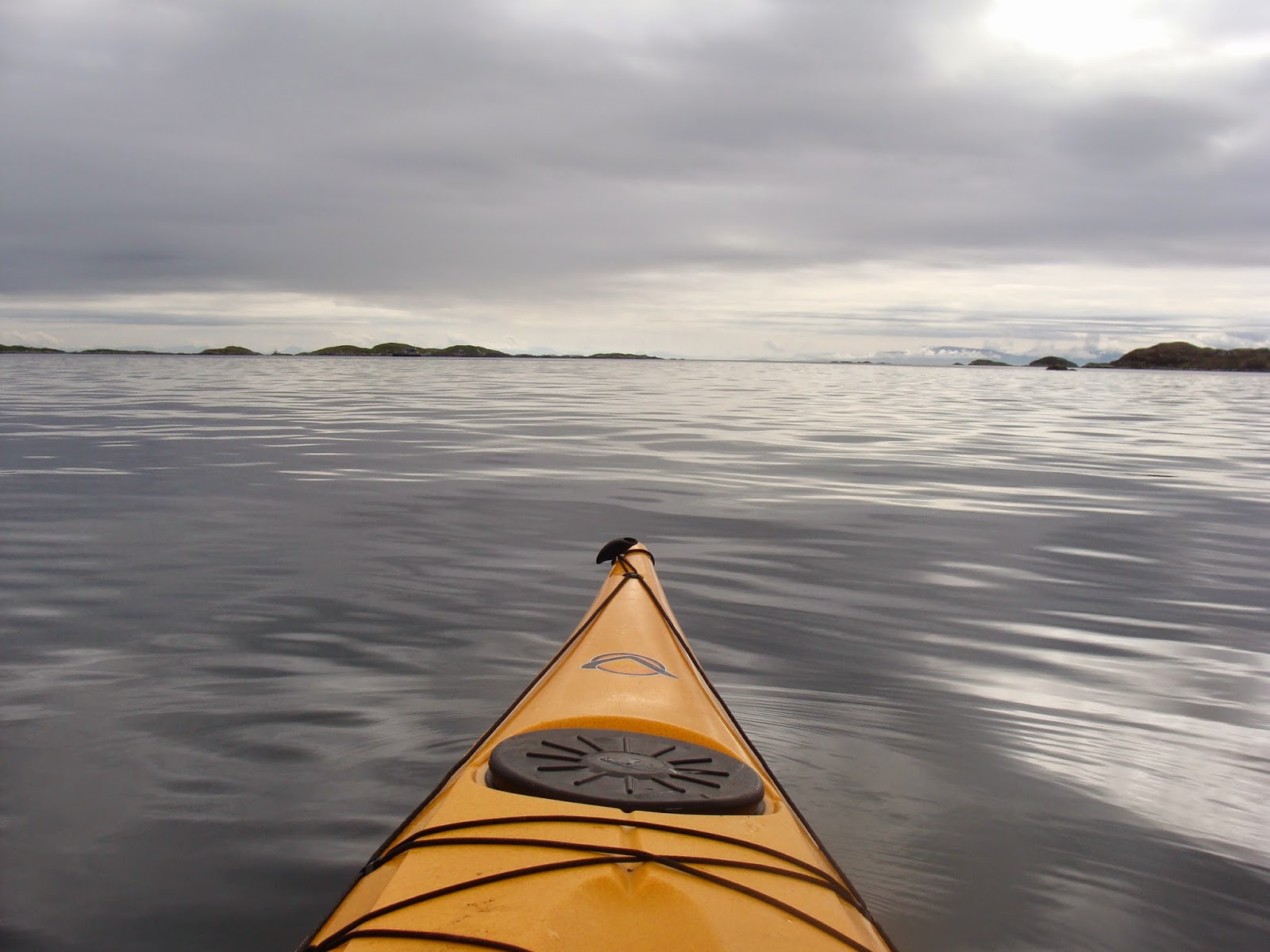
Kayaking on the flat calm bays of East Harris - not far from Loch Needletail (where respects were duly paid)


Arctic skuas chasing terns at Luskantyre beach, Harris.


Friday, 20 September 2013

The Eagle Isle


As an island, Mull is largely defined by the presence of water, and water was a recurring theme on my first visit there last weekend. It smeared glasses, closed roads and seeped into socks, but it never once dampened an amazing trip. The plan was to spend a couple of days walking, cycling and visiting some of the islands but it was quickly apparent that the latter two at least would be foolhardy. But after pouring over the maps and hiring a car, we were soon able to explore the island and its stunning wildlife.

It started off fair and easy, with a millpond crossing of the Lorn on a CalMac ferry that was heaving with Iona daytrippers. From a spot on the side deck I was soon able to pick out the distant shape of a Black Guillemot in streaky-white winter plumage in the outer reaches of Oban's sheltered harbour. A flash of its wings lending a hand. Gulls loafed here and there, Herring mostly with a few commons, while further out some juvenile Kittiwakes appeared. The highlight of the crossing were two Harbour Porpoises that surfaced briefly alongside us before disappearing beneath the bow waves.

The journey north from Craignure was via the unlikely form of a an open-topped double decker that took us headlong into a cool mist, past Salen where Grey seals were hauled out on the rocks. And so we arrived in the pretty village of Tobermory, with its picture postcard harbour front and smell of whisky on the breeze - just as it should be in places like this. 

Using the excellent Cicerone walking guide to Mull, a path out beyond the last building on the far side of Tobermory harbour led along a wooded hillside to the Rubha nan Gall lighthouse. Coal Tit and Goldcrest foraged along the way while numerous Rock pipits poked about on the grass covered rocks. Offshore a lone Guillemot croaked its call and the odd Gannet soared past. North of Rubha nan Gall is 'Bloody Bay' - so called from a clan battle in 1480 which it is said saw the sea turn red. Apparently, it this event that the author Jim Crumley describes gave the Oystercatcher its red legs and bill, on account of those that waded along the shore that day. There's no blood now that I can see but I wondered if the Raven tumbling about a distant cliff edge knew something else.

Following a night of rain, on Sunday morning the streams were crashing down, including the Tobermory River which shot a spectacular torrent of white water into the harbour. Watching from the side, the gulls were nae bothered but I was in the right place at the right time to see two Dippers darting about on the rocks, at one point landing just a few metres away.

Setting off  for Calgary Bay, the weather changed every 20 minutes or so. During a sunny respite alongside Loch na Keal, a female Red-breasted Merganser drifted close to the shore and, following a tip-off, we spotted an Otter on the rocks right in front us - something we nearly missed! It was brief but great to see. Scoping the loch, a flock of four more mergansers flew past in the distance and ten+ Greylag geese were perhaps the real deal arriving for winter, unlike the zombie geese I see in London. The winding road to Calgary was interrupted by diversions caused by flooding so it was no surprise that the white sandy bay we eventually arrived at resembled a war zone. Still, wildly beautiful, the beach was strewn with seaweed and scattered stones with a single Redshank making the best of it all. Tucked behind a clump of marram grass was a dead Gannet, washed up sometime ago. In a flooded field across the road, oystercatchers probed and pottered along with several Curlew; despite the drizzle, swallows constantly swooped about.

Rubha nan Gall, near Tobermory, 14/9/13
Dippers (Cinclus cinclus) in Tobermory harbour, 15/9/13
Hooded Crow (Corvus cornix)
Common Buzzard (Buteo buteo) hanging out, Loch na Keal, Mull

Later that afternoon, as the winds dropped and the sun shone meekly, we stopped for a walk through the pines at a Forestry Commission site just off the main road. From the rutted track coal tits were ever-present while a flock of 7-8 Crossbill overhead was nice to see. Our arrival back at the car was well-timed as the next front swept in and decided the sun had its day. But as the sky darkened to breaking I caught a pale jolt in the glooming periphery of the hillside below; slowly jinking it's way across the field was a male Hen Harrier, pearly grey with ink-dipped wings. Then the rain became hail and it disappeared from view. I always love to see this bird, a supreme bird of this land. In fact, over the course of the weekend, I saw more hen harriers (seven) than I did chaffinches (four); maybe this says a lot about the kind of place Mull is and the kind of place others are sadly not. 

Although the hills and mountains remained shrouded in mist, Monday was calmer and we went for a walk on Loch Ba. Being less exposed I thought it might provide some shelter and also be the kind of place eagles might be forced down to in poor weather. Thankfully, most of that proved to be true. 

Loch Ba is a beautiful spot, surrounded by steep mountain sides with streams and waterfalls flowing from the summits like jagged veins down to the loch at its heart. Following the gravel track along the water, we passed through thin strands of Oak, Willow and Ash, pale bushy lichens clinging to their twisted trunks and branches. Somewhere near the middle of the loch, we walked across a soft, grassy area guarded by a fly fisherman in the distance. Crossing here, we flushed a flock of small birds into the air nearby. They called incessantly and Linnet crossed my mind, but straight away I felt the calls were subtly different from what I expected. As I moved closer to the birds low in the grass by an old cattle feeding station I was as sure as can be that I was looking at my first flock of Twite. I hadn't been sure I would see them here so that was a real bonus.

The form continued as a short way further along the track I picked out a large raptor coming off the mountainside to our right. Getting on it there was no doubt that it was a Golden Eagle and coming head on towards us too! We watched as it descended into a low copse ahead of us for a few minutes, presumably for shelter, before it took off again, banking high to the right. As it did so, it succeeded in flushing a Hen Harrier from a lower slope and for a few moments I was able to enjoy both majestic birds in the same binocular view.

I guess anyone visiting Mull hopes for a glimpse of possibly their most famous residents and I was no different. Further on up the track, near where the loch tapered to a thin beach, I saw movement over the water to the left. My first thought was that it was probably a Grey Heron crossing the loch but when I raised my bins I realised I was looking at my first White-tailed Sea Eagle - an adult and an immense beast of a bird! It moved past us, perhaps a hundred metres off over the loch, battling the headwind with all the power of the feathery doors strapped to its back. A minute or so later it was lost to the murk but what a privilege it was to see.

Before heading back we left the loch for a while and followed the path up the glen. A victory lunch of Irn Bru and Skips was had in a ruined farmstead where the tall crags of Glen Cachaig peered over the crumbling walls at us.

The track from Knock to Loch Ba, Mull
The mists rolling in
Bam...
Bam...
Boom. White-tailed Sea Eagle (Haliaeetus albicilla) Loch Ba, Mull, 16/9/13.

What a fantastic few days. Leaving the next afternoon after a tour of the distillery and a complimentary dram, we could only laugh as the sun came out as soon as we bordered the ferry home. 


Mull Trip List, 14th-17th Sept 2013:

Herring Gull, Black Guillemot, Kittiwake, Shag, Cormorant, Common Gull, Pied Wagtail, Hooded Crow, Black-headed Gull, Great Black-backed Gull, Grey Heron, Lesser Black-backed Gull, Blue Tit, Coal Tit, Feral Pigeon, Robin, Wren, Goldcrest, Rock Pipit, Raven, Gannet, Guillemot, Treecreeper, Chaffinch, House Sparrow, Dipper, Common Buzzard, Greylag Goose, Mute Swan, Mistle Thrush, Red-breasted Merganser, Curlew, Stonechat, Dunnock, Common Whitethroat, Kestrel, Oystercatcher, Redshank, Swallow, Meadow Pipit, Grey Wagtail, Common Crossbill, Hen Harrier, Mallard, Twite, Golden Eagle, White-tailed Sea Eagle, Lapwing, Skylark, Goldfinch, Starling.

Thanks to everyone who gave me tips on Mull beforehand - the good folk of twitter and particularly Kev Parr (and Martin S) Cheers!

Recommended Links:


Sunday, 14 July 2013

Love and feathers

Postcards from a sister abroad...

Hi Peter 
Churp Churp! I am Betty Birdbrain and I recently met your sister, who told me you like birds. As you can tell I am a very beautiful bird, although I am a bit birdbrained and forgot what type I am - it might be a bit of ostretch but perhaps you could tell me? I also sang you a song, which I have attached, along with a photo of me chilling in Porteau Cove, a majestic spot just south of Squamish, in British Columbia. I heard you couldn't make it out here this year so it's to remind you to keep on plotting, and keep your feathery chin up.
I also attach some photos of my friends, Bill the bald eagle who lives in Lighthouse Park, right by your friend Bobby's house, a talonted featherweight boxer, and Ruby the red-cheeked speckle-backed pretty bird. She has been feeling a bit beaky lately but hopefully she'll wing her way through it. Then there's Pecky, who has also flown the nest without finding out his actual name, and Harry the Heron, who enjoys the views of Vancouver's skyscrapers - or at least he thinks he's a heron?! He'll egret it if he can't find out :) 
We all send love and feathers, 
Eyes to the skies, Chirp Chirp 
The BC Bird Gang xx 


BC birds: Great Blue Heron, Northern Flicker, Barn Swallow, Bald Eagle

Thanks Sis! x

Monday, 1 July 2013

The Farnes and back

I got back yesterday from a fantastic couple of days around Northumberland to make the most of a week's holiday from work. In spring and summer the Northumberland coast is home to tens of thousands of sea birds which breed in dense colonies around the nearby Farne Islands; there's no doubting the highlight of my trip...

I knew it was going to be special but it wasn't until I boarded one of Billy Shiel's all-day boat trips from Seahouses harbour on Wednesday that I could appreciate the scale of this seething mass of bird life. Wherever I looked, birds continually fizzed overhead like odd-shaped bullets fired from the sea, the cliffs wailed and shifted with the presence of thousand upon thousand of Guillemots, Razorbills, Puffins... In short, it was astounding and simply one of the most remarkable wildlife encounters I've ever experienced:

Grey seals and Staple Island

A wall of auks, the sight that greets you
A Puffin takes flight as a Fulmar looks on
The money shot: Puffin (Fratercula arctica) on Staple Island
Razorbills (Alca torda)
Kittiwakes (Rissa tridactyla)
Shags (Phalacrocorax aristotelis)
A Guillemot (Uria aalge) feeding its chick -
note the white eyering and marking of the 'bridled' variety

Staple Island was the first stop and stepping onto the area roped off for visitors, you instantly came face to face with birds normally seen at distance, flashing by over waves or huddled up on rocks. The steps from the jetty were lined with guillemots, shags and puffins - some on nests, some with young already wobbling between them. It was incredible to be able to peer into this private part of their lives, birds at their most tender and frantic. At one point I sat no more than two meters from a pair of Shags as they courted, each wrapping their slender neck and bill around the other, it felt oddly voyeuristic but it was a privilege and genuinely moving. It was funny too to watch puffins land with full bills of small fish, only to get instantly mugged by roving gangs of Black-headed and Lesser Black-backed gulls who've clearly realised that there's no need to go for food when it readily comes to them. To avoid losing their meal, the puffins would either fly off again or charge down the nearest burrow and if it wasn't theirs, emerge slyly and scurry off again with gulls in pursuit - all that was missing was the Benny Hill theme.

After Staple Island the boat crossed to Inner Farne, an island where one iconic bird in particular rules supreme:


Paradise City: Arctic Tern (Sterna paradisaea) on nest 
The courtyard on Inner Farne

The Arctic terns that met us off the boat are a fearsomely characterful mob, the island is theirs and they know it. The sky was full of their elegant shapes and clattering cries and it's true that they nest just about everywhere there. I received numerous pecks to head and just like that guy above, my favourite birding cap is definitely in need of a wash now. What ace birds though: noisy, feisty and with an annual migration that covers some 45,000 miles, true wanderers of the bird world. Amazing stuff. Joining them were Common and Sandwich terns, more auks, kittiwakes and at least one pair of Eider. Passerines on the islands I visited were limited to a single Rock Pipit and Pied Wagtail and two swallows were present also.

In a year which started with Puffin wrecks along the north and east coasts and thousands more breeding sea birds killed or affected by the polyisobutene (PIB) chemical spill in the south west, these islands are a reminder of the wealth our seas offer. Simply stunning.

Rock Pipit (Anthus petrosus), Seahouses harbour, 25/6/13
Looking out to Inner Farne
Sunset over Bamburgh Castle, 26/6/13