1. This morning I watched a pair of dunnocks from my window, a pair I assume, as each followed the other without chase or threat. They inspected the dense realm of ivy sagging on the garden fence, a pair of dunnocks have nested in that same spot for several years. One of the birds showed an odd interest in my car parked below and, as I watched, made repeated attempts to peck the wing mirrors and windows. It mistook its reflections for a rival bird and wasn't taking any chances.
2. At work this afternoon a buzzard sailed overhead with crows on its case like streamers on a kite. I'll argue it's always a good day when you see a bird like this. It followed the shady, wooded ridge of the reserve west and out of sight, perhaps considering a place to roost. I looked at my watch and it was 4.09pm. I could sense the dusk around me, through that last blast of chatter from birds, the searching gulls overhead, that stillness. But instead of sweeping down, it stalled and I was very aware that the evening was getting longer.
3. I came home and heard the news that Lodge Hill has been called in. The right decision after many, many wrong ones. It doesn't mean anything yet, but still, it capped a good day.
Friday, 13 February 2015

Monday, 2 February 2015
Grenada, 1/1/15-7/1/15
 |
| St George's, Grenada, 7/1/15 |
The Lesser Antilles never featured much on my radar as a place I’d ever likely visit. During wishful journeys I've traced in the atlas I suppose my eye immediately wandered to the two great continents sandwiching this chain of small islands. So it was my girlfriend’s idea and her plea for some winter sun coupled with a steadfast refusal to spend another holiday “standing in a ditch wearing waterproof trousers” that saw us packing the lotion and heading off from Gatwick in the murk of new year’s day morning.
Researching the trip was lots of fun and relatively straightforward since there are only two international airports covering the region (and Barbados). That, along with an amazing deal on a flight to Grenada, helped us cobble together a two and half week journey travelling South – North, from Grenada, through St Vincent and the Grenadines, before spending time in Dominica and flying out from Antigua. I knew embarrassingly little about the region and hadn't heard of half the islands, but I knew it would be hotter than Kent in winter. Besides booking some accommodation, I arrived having read relatively little, opting for the adventure of it all. I did read about the wildlife of the region even though “not a birdwatching holiday” was given as the party line. Happily for me though, that wasn't always the case and I’ll mostly stick to that here.
For all the anticipation, we were greeted at Grenada airport with the kind of downpour that causes (light-hearted) consternation among a holiday crowd, most of whose very reason for being there was to avoid such a thing. But happily it soon abated and the smell of rain on hot tarmac began to permeate through our first wide-eyed glimpses of a lush, green island. That first hour made quite an impression as we bounced around in the back of small minibus on the way to our lodge in Crochu on the Atlantic coast. It’s the colours of the gardens and trees that whizzed by that sticks in my mind, the lurch of breaks and the urgent, jumbled rhythms of soca music on the bus stereo. That was followed by the realisation of how quickly the warm afternoon light gives way to night here. In a blur we’d been introduced to our lovely host, Ingrid, and were following the sound of yet more blaring music to a nearby street party where we drank ice cold Caribs on the kerb, surrounded by locals on motorbikes and the sweet, humid, tropical night.
The next morning I awoke and was soon smiling stupidly at our colourful surroundings, a postcard blue sky and all manner of new sights and sounds. The gardens held a nice variety of birds and searching the lime tree sprawled over the balcony I could soon make out the first exotic, feathered shufflings of the trip. Tropical Mockingbird, Lesser Antillean Bullfinch and the ‘black’ race of Bananaquit were all conspicuous as were scaly Common Ground-doves, a perfectly proportioned dove not much bigger than a sparrow. A superb Gray Kingbird whistled and darted from a prominent perch nearby. Everything was so new, except one thing - a familiar, drawn out song rattling in the lime tree belonging to a House Wren, the tanned cousin of our own troglodyte.
A visit to the picturesque capital, St George’s bought my first view of a Magnificent Frigatebird over the harbour - a truly prehistoric looking bird and well-deserving of its name. Getting acquainted with the ‘squeeze in and hold on’ customs of the local buses we saw a lot of the island. One of my favourite sites was Levara Pond at the north eastern tip which we reached after walking from Sauteurs. Huffing through the heat of the day (as only an English person would) the walk was briefly enlivened by the appearance of an enterprising young boy who seemed concerned that we were destined to get lost. His generous offer of guidance also came with the offer to buy a tablet which, unfortunately for him, I declined. I explained I think he’d picked the wrong tourists as I am still not entirely sure why I’d ever need one. The walk was great, taking in the beautiful and remote turtle-nesting beach of Levara, before a track inland led us via a boardwalk through dense mangroves to a viewing tower overlooking a large lake. Here on the fringes, among the exposed, spidery mangrove roots lurked Snowy egrets, green and great blue herons, an Osprey looked on and a Caribbean Coot and Pied Billed Grebe made the only ripples on the water’s surface. The site is part of a wider Ramsar-designated protected area in recognition of its biodiversity and importance to sea turtles.
 |
| My first encounter with a Magnificent Frigatebird (Fregata magnificens) |
 |
| Yellow-crowned Night Heron (Nyctanassa violacea), Rex hotel gardens |
 |
| Carib Grackle (Quiscalus lugubris), Grenville |
 |
| Levara beach, Grenada |
From a birder’s perspective though and indeed Grenada’s own, there’s one bird that holds sway over the island and one I was especially keen to see. The secretive Grenada Dove is the island’s national bird and, regarded as critically endangered, a genuine world rarity. Confined to small pockets of woodland in the south west, but more frequently encountered on posters or painted on village walls, seeing it takes a bit of luck and local expertise - or both. Before leaving I’d arranged to meet a local guide, Jerry, who knew the island’s birds better than most since he’s pretty much Grenada’s only dedicated birdwatcher! Imagine that.
On the day, Jerry picked us up at 6.30am and we headed off on a circuitous route of the south, first taking in some mangroves near La Sagesse for a smart vagrant Tri-coloured Heron. A stop at a mangrove viewpoint near Woburn held a good variety of North American waders including a Least Sandpiper, several Semi-palmated sandpipers and Wilson’s Snipe. With the sun well up, we then made our way to the Mount Hartman Estate to begin our search for The Dove . All the while Jerry talked passionately and knowledgeably about Grenada’s wildlife and his love of the forests. Despite the Grenada Dove walking a fine line with an estimated population of well under 200 males and development in the area an ever-lurking issue, he was positive about the role of eco-tourism and the various local efforts to preserve it. Walking the narrow, winding trails on the estate, under a dense canopy of scrub, our first stop found nothing. Moving on we saw Grenada Flycatcher, Yellow-bellied Elaenia and bulky Scaly-naped pigeons before Jerry picked out the plaintive, sighing calls of three doves nearby. None showed but it was a quietly rewarding moment in the heat of the morning. Another target on the estate was the Grenada race of Hook-billed Kite, thought to be endemic and worth further study. Unfortunately these had been scarce for some weeks and we didn't see any but we still had good views of a pair of Broad-winged hawks, the commonest raptor by far on the island.
Returning to the entrance, Jerry suggested we try the first spot one last time which we did. This time, as we resumed the same positions, he instantly hushed and pointed a little way to our left and the pale form of a Grenada Dove quietly picking its way across the woodland floor. A subtly pretty bird with a bold white crescent where wing meets breast, it was a privilege to share a moment with it in the woodland it calls home, the only place on earth.

 |
| Mt Hartman peninsular, home of Grenada Dove; photo showing land lost to a new marina on right, 4/1/15 |
 |
| Village mural, Crochu |
Some time later we finished the day in Jerry’s garden watching hummingbirds on his sugar water feeder. He showed us around his garden pointing out the dizzying array of fruits, herbs and spices growing in a small area: cocoa, cinnamon, nutmeg, avocado, bread fruit, golden apple, lemon grass and callaloo to name just a few. It was wonderful to smell their warm scents, straight from the earth. I had the feeling that if I ever stopped moving for long in Grenada the vegetation would reclaim me and make me an ungainly scarecrow, with binoculars round its neck. And I mean that in the very best way.
One bird I hadn't expected to encounter as much as I did on the islands was Merlin, a bird that for me conjures up images of my local marshes on bleak, winter days. Yet stopping at the abandoned Pearl's airfield on the east coast one afternoon, I saw just that - a male Merlin chasing barn swallows...successfully too! Completing the unusual scene were several old cuban planes parked on the edge of the runway, relics of Grenada's 'socialist experiment' in the late 70s and long since air-worthy. Faded, dented and stripped in places, the planes were otherwise eerily real with only the restorative limbs of flowering creepers and trees deciding their fate now.
As well as discovering its turbulent history, it's incredible to think that only ten years ago Grenada suffered catastrophic damage from Hurricane Ivan, an event which shredded the island's basic economy by devastating key cash crops such as nutmeg and damaged 90% of homes. Jerry showed us traces of it that are still visible on hillsides and villages, but I was struck by the good-natured stoicism of people we met. Equally impressive were the novel attempts at diversifying the agricultural sector through local cooperatives and eco-tourism. For a country I knew so little about, Grenada was a real surprise and wonderful place to explore.
Recommendations:
Big Sky Lodge - excellent garden lodges in Crochu
Birds
Buses - do it
Chocolate - Grenada Chocolate Company and Belmont Estate
Jerry - forester and bird guide, knows the birds of Grenada inside out. Email: tonydove200@yahoo.com
 |
| Brown Pelicans over main street, Carriacou, Grenada |
Tuesday, 27 January 2015
A Hummingbird
An Antillean Crested Hummingbird to be precise...

I took the above photo a few weeks ago on the beautiful island of Grenada in the Caribbean. It was a bit of luck, I was actually photographing the flowers when it flickered into view. I like the blur of its wings, the hint of its iridescent green and blue plumage and its well-defined crest, I especially like its feet. I'd never considered hummingbird feet before.
You rarely see hummingbirds perched, as I found, instead rain or shine they kept to wing and flower, the habit fueled and demanded by their incredible metabolism. In Grand Etang forest, at the cloudy peak of the island, I frequently heard the Rufous-breasted hermit hummingbird before I saw it, an insect-like throb of tiny wings far too quick to follow. The sound of a bird living life in the fast lane.
It was a great trip.
A belated Happy New Year to everyone, more from the Caribbean shortly.
I took the above photo a few weeks ago on the beautiful island of Grenada in the Caribbean. It was a bit of luck, I was actually photographing the flowers when it flickered into view. I like the blur of its wings, the hint of its iridescent green and blue plumage and its well-defined crest, I especially like its feet. I'd never considered hummingbird feet before.
You rarely see hummingbirds perched, as I found, instead rain or shine they kept to wing and flower, the habit fueled and demanded by their incredible metabolism. In Grand Etang forest, at the cloudy peak of the island, I frequently heard the Rufous-breasted hermit hummingbird before I saw it, an insect-like throb of tiny wings far too quick to follow. The sound of a bird living life in the fast lane.
It was a great trip.
A belated Happy New Year to everyone, more from the Caribbean shortly.
Wednesday, 31 December 2014
A year on the patch
I have regularly used the BTO's 'BirdTrack' for a few years now but this year I made an extra effort to record all my patch visits over the two kilometre squares it incorporates and I have enjoyed looking back at the statistics. Here's how Song Thrush records fared this year for instance, any idea when autumn migration kicked in?!

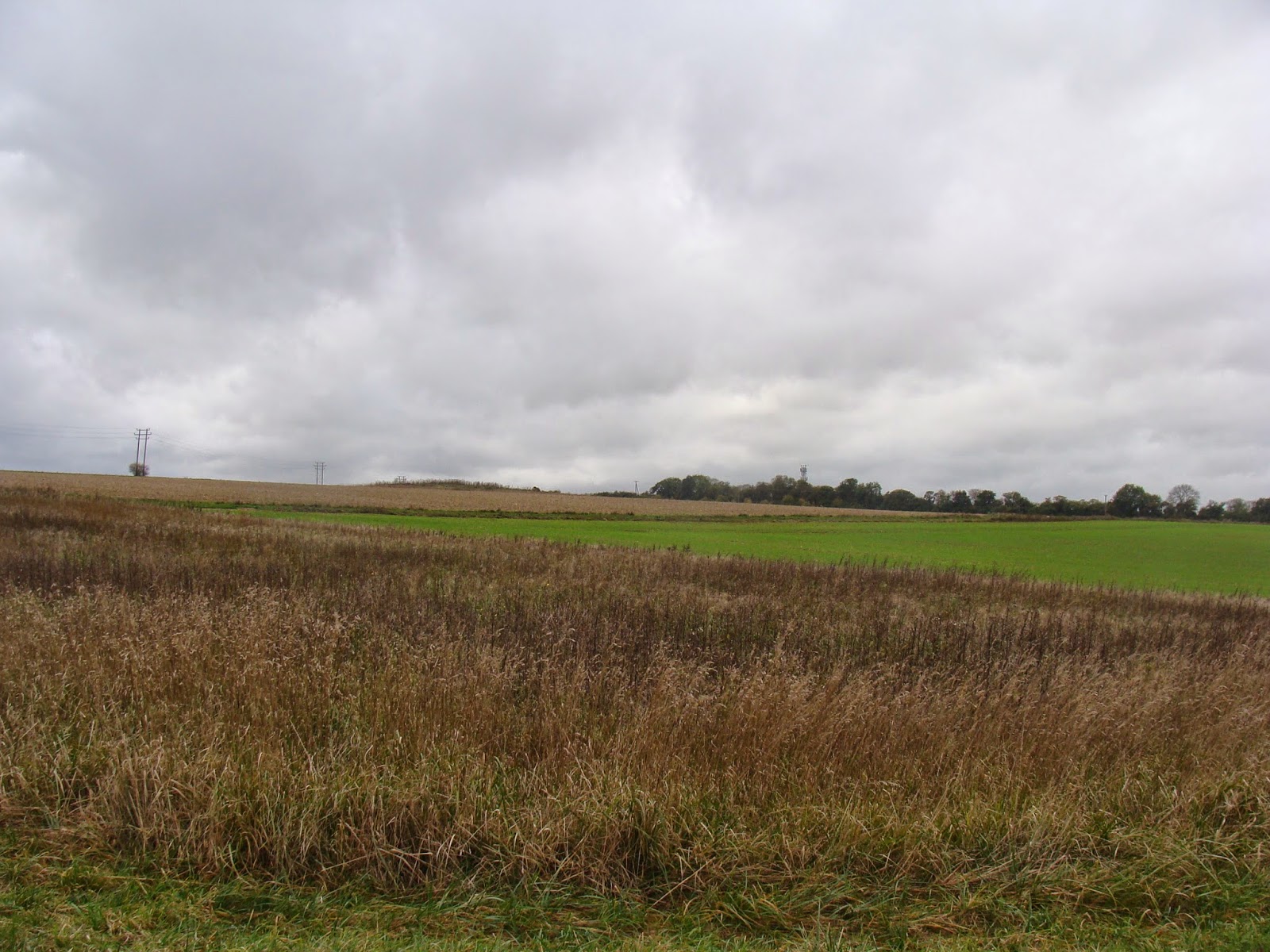
What I often refer to as my 'patch' in Longfield, most other locals probably refer to as 'the Gallops'. As a kid that's what my parents called it so we followed (slightly confused by the horse reference given that we never saw any horses up there), but it's a name that has always stuck. I now know the reason for it, some learning that has unfolded over time through snippets of conversation and a chance encounter.
Over the years I have come to love it, despite it appearing to possess little birdwatching or natural history potential; there is not a drop of water in sight and it is a good few miles from the coast, it has poor diversity of vegetation beyond a small copse, a few hedgerows and some grassy verges. And yet I still visit regularly. It is still farmland thankfully, largely resisting the dirty hands of developers in North Kent, lowland, arable with a fondness for spring onions and potatoes. But it has space on side, open fields and elevation, sitting as it does on a chalk ridge, like the North Downs a few miles to the south. Looking north I can see the River Thames marked only by the grey industry of Northfleet and Tilbury hunched and crowded on its shores: cranes, shapeless buildings and, in recent years, wind turbines on the horizon.
But now I realise that to call it unremarkable is wrong, because it's ultimately not what a local patch is about. It is as much about those small discoveries, those common birds, as it is anything else. Through the familiarity gained, what I've loved most is observing how wildlife uses the site, and more than anything, how it changes through the seasons, as sure as a calender turns a page. By those standards, this year was a great year on the patch.
 |
| Linnet, April |
 |
| Common Buzzard, February |
 |
| Stonechat, October |
As usual there were few surprises through last winter with just a small wintering flock of meadow pipits and occasional glimpses of the corn bunting flock of any note. The year's sole treecreeper record came in February along the edge of Court Wood and the first buzzard appeared, it was a good year for sightings of these. Spring arrived on the 14th April in the ever-heartening form of male wheatear that flushed out from a field edge; the same day the first pair of swallows streamed overhead and a blackcap was singing in the copse. A few days later, on the nineteenth, whitethroats had returned and were spread widely throughout the hedges for a week or more until only those on territories remained. Two spring highlights followed soon after with my first patch Lesser Whitethroat singing in the top hedge on the the 26th. On the 2nd June, a late-evening walk bought the surreal yet triumphant sight of an adult Mediterranean Gull drifting low across the fields towards the village. I nearly dismissed it at first before I remembered that even Black-headed gulls are not overly common at that time of year and checked again.
June saw bright skies and buzzing migrants, including a Cuckoo calling in the first week during my second BBS survey of the season. Yellow wagtails slipped through before becoming more conspicuous from the first week of July, the first appearing on the same date that two swifts headed determinedly south. A juvenile in the vicinity was particularly interesting. House sparrows are absent on the site for much of the year but small flocks venture out in summer, foraging along the magic hedgerow and often in the crops - a flock of twenty was good to see. If I had a single highlight this year it probably came in late-July, into August, as the corn bunting flock swelled to over 70 birds. With such troubling declines elsewhere this was incredible to see and an immensely satisfying result for the simple wildlife-friendly measures employed by the farmer (whether he realises it or not!)
Such measures, including leaving long grassy margins along the tracks, also encouraged butterflies and the summer months saw plenty of activity with a dozen species recorded in good numbers. At the same time, the chalky soil yielded new surprises like yellow rattle, while sweet, pink sainfoin peeped from beneath the stubble.
It was the best year yet for passage wheatears and the first outgoing bird appeared on the 29th July, followed by small numbers (including a flock of 7) through August and the last on 15th October.
 |
| Corn buntings and house martins on a magic evening, August |
 |
| A Painted Lady on thistles, June |
 |
| Wheatears on their way, August |
 |
| Looking east, July |
The first signs of autumn were visible in August with a light passage of rooks to the west and the wheat harvest ongoing from late-July. There was time for a last hurrah with another patch first - a Hobby performing acrobatics over Court Wood on 3rd September. On the 9th, following widespread passage across the region, up to five whinchats stayed for a week, making use of some weedy setaside established in the last few years. It seemed like a good year for them. The same day saw the first meadow pipits of autumn, followed a day later by two chiffchaffs. On the 17th, a flock of 36 Jackdaw flew north and blackbirds had noticeably increased, but the undoubted highlight was a first Grey Wagtail in the dump briefly. Spring onion picking continued through September and the potato harvest started mid-month.
Following reports of migrant thrushes arriving in number on the east coast with favourable winds on the 15th October, a late-night patch visit resulted in numerous redwings and a few blackbirds being heard flying overhead in the dark! The passage continued into the next morning where several small flocks of redwing could be seen flying over. The most remarkable tally however was for song thrushes (see above) with nearly 50 migrant birds recorded across the site in 2 days. The 15th October also saw perhaps the biggest patch score of the year. A local birdwatcher had reported seeing flocks of Brent Geese flying up the Thames at Gravesend before diverting inland on a south westerly trajectory. Drawing a mental map it seemed that would take them pretty close to Longfield and lo, a flock of ten passed along the ridge that same morning! That was a dizzy morning, I nearly missed my train to work!
Since then, bar another thrush movement in early December which included a scarce Mistle Thrush and Fieldfare, recent weeks have seen the inevitable winter lull set in. But I guess a lull is never a lull for long, it soon becomes a beginning once again.
In total I recorded 68 bird species on the patch this year - not bad for a few fields...
Happy New Year all - thanks for reading.
 |
 |
| Little Owl at dusk |
Monday, 29 December 2014
Standard Fare
Walking down a quiet lane yesterday I spotted a row of limp, straggly fruit trees on the verge, all bare save one. It's branches were heavy with baubles of spongy, pale crab apples. I instinctively reached for my binoculars. At this time of year our landscapes can feel devoid of colour or life, but find the food and chances are you'll find the birds.
And there it was, a lone Fieldfare perched among its jewels, one eye on me and one on its precious hoard.

Thursday, 11 December 2014
On the margins of Land and Sea
It was a wonderful weekend just gone, one spent on sparse, sloshing fields stripped of seed, flower or scent, but still full of promise as the seasons reach their ebb.
On Saturday, with a bright winter sky rising, I set off early for East Sheppey, one of my favourite destinations at this time of year. I pondered my plan for the day en route before settling on the usual walk. I crawled along the Harty Ferry Road where the fields were subdued under a heavy frost and little stirred besides a breakfasting kestrel. Past Capel Fleet, house sparrows picked at gutter grit and disappeared into the hedgerows as I passed. Abandoning machine for mind, I soon set out down the track towards Sayes Court looking forward to the day ahead. The copses and hedgerows sparked into life with winter thrushes, woodpecker and finch. Down towards the marsh a hundred and more linnet clung to weedy stems of maize while the first of a dozen stonechats performed nimble aerial feats in a survey of their surroundings.
On the old, grassy seawall I stood somewhere on the margin of land and sea, but safely separated from the realm of water on either side. Small flocks of brent geese flew in off the Swale to join an impressive thousand-strong flock snaking across a distant field like an exposed coal seam. In the small hide I was joined by another birder and between us we traded a Hooded Crow on the marsh for a ring-tail Hen Harrier patrolling a strip of setaside. I quietly admired the handful of White-fronted geese, their tiger-striped flanks, which kept company with the greylags.
 |
| Swale NNR, Sheppey; looking west to Shellness |
 |
| Hooded Crow (Corvus cornix) |
 |
| Redshank (Tringa totanus), Shellness point |
The tide was up at Shellness point where a large mixed flock of waders were packed into the roost, all legs and huddled grey bodies.
At Muswell Manor I walked the track back to Harty as shadows grew ever longer; although not much past lunchtime, the sun's plight was already perceptible. On a fence post a Peregrine flexed its wing before taking off on a lazy swoop at some woodpigeons. Watching its flight I caught sight of another and between the two of them a perfect chaos ensured in the blue skies. Back at the top, sparrows still squabbled in the dirt as I made my way to Capel Fleet. In keeping with the day, the mound was almost deserted. A ringtail Hen Harrier soon appeared quartering a ditch at some distance, before a male ghosted across its path. Ghosted is the word. For in the impeccable winter's light softly falling behind me, teasing each detail, he glowed - all save those inky black wingtips.
Dusk bought the cold back and fingerless glove regret but it was tempered by a fiery evening sky. A woodcock fluttered over and starlings whistled restlessly in the reeds before, in the dim light, two short-eared owls could be seen making silent swoops over the grassland. I squinted after them until even that became too much, the fields merging into one against a blazing sunset.
 |
| Hen Harrier by ATM, Shellness |
 |
| Sunset over Capel Fleet |
(Title by JS - thanks, I always liked it)
Thursday, 4 December 2014
Notes from London's 'duck scene'

Apologies for the shameless plug but I thought I'd post a short article I wrote recently for London Wildlife Trust's members magazine 'WildLondon'. The theme of this issue is wetlands and in particular, those sites within an urban setting.
It's no surprise to my mind that I often associate 'urban wetlands', those ponds, park lakes and reservoirs among many others, with people. It seems that these spaces draw people in like few other habitats; they are often natural focal points within these landscapes, admired as much for their openess and ebb as they are feared for their mysterious, cool depths. Our urban wetlands also support a wealth of species and central to their appeal is the more immediate sense of contact with wildlife that they offer, unobstructed and at close quarters.
Visit any urban wetland and chances are the first thing you'll see are ducks - diving, dabbling or displaying - and that's the subject I was given for this article. I love ducks, who doesn't? As such, a 500-word limit was hard. When I re-read my original draft, I'd spent nearly 100 words describing the pleasingly subtle colours and habits of wigeon. Thanks to the editor then for squeezing the bulk of it in. Thanks also for the amazing sub-title. I bet you didn't know London had a 'duck scene'?!

Subscribe to:
Posts (Atom)