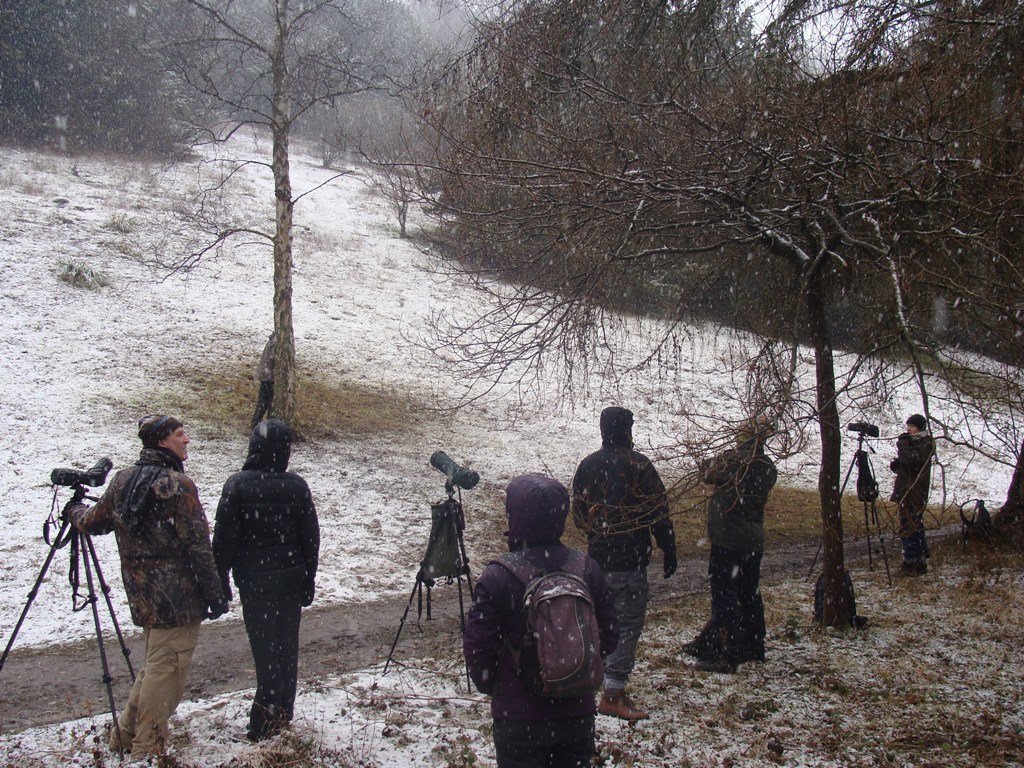
Cooling Marshes, Kent, 7th December 2014
Showing posts with label Politics. Show all posts

Wednesday, 24 September 2014

London Climate Change March, 21/9/14


If you read the papers on Monday morning you'd be forgiven for thinking that there weren't many news-worthy stories happening on Sunday, not just in the UK, but in numerous countries across the world. It is, after all, quite a regular occurrence these days to see many thousands of people gathered on the streets, placards in hand, shouting, cheering, clapping or just quietly expressing their feelings on important issues to the powers that be. I mean, isn't it?

Here are a few photos from the rally held in Parliament Square on Sunday to highlight the depth of public feeling on the global threat of Climate Change. The event was timed to coincide with the UN's New York summit on Climate Change which started this week. 

I spent a fun few hours walking among the 20,000-strong crowd, the same one whose numbers I'd overheard two policeman sneeringly belittle as they watched from Parliament Square. I liked reading the placards that bobbed around me and the messages that came across:


Of those messages, the threat of Climate Change and the disentangling of democracy from corporate interests rightly gathered side by side. Emma Thompson's speech railed against the degree to which corporations responsible for so much strife and environmental damage have wormed themselves into our culture and collected unconsciousness. The Bishop of London spoke of Climate Change as a "moral issue".  

After the speeches, an ill-advised (?) minute of silent reflection and the rather saccharine video that proceeded them, a huge carbon molecule loomed into view... 


...and there was a game of spot the pigeon too...


But overall, the message was clear...


Why did people march for Climate Change? See this useful New Scientist guide.

Wednesday, 20 November 2013

#OutOfTouch

Browsing twitter on my way home from work this evening, I came across a curious series of tweets from the Department for Environment, Food and Rural Affairs (Defra). They were the highlights of Secretary of State Owen Paterson's speech to the Policy Exchange think tank in Westminster today. The selected snippets made me chuckle a bit, as I'm sure it did a few others (he certainly makes it easy doesn't he?!) I was going to respond to each of these below with my own thoughts but I try to keep swearing to a minimum here and I think they're best left to stand alone. That is, except the last two, which I will probably come back to soon. I'll leave the rest up to you: discuss, debate, enjoy, weep...


Tuesday, 6 August 2013

Click, Protest, Relax

In  a recent post I mentioned the sense of unease I often feel about on-line campaigning - how petitions and other such devices seem like an easy way out of dealing with a situation. In an age of social media, the forms of armchair protest it offers are perhaps all too readily accepted or hard to ignore. In an age too, where our disconnect from nature as a whole is seemingly more pronounced than ever before, I can't help but think protest should be personal, and we're losing it.

This isn't to say social media has no place; little or nothing surpasses twitter for getting a message spread quickly or bringing an issue to the attention of millions. Petitions even, have a place. But ultimately, these shouldn't be the limits to our imaginations.

Kelly sent me this link to a TV ad by Unicef that aired in Sweden recently, it makes a similar point:


'Put your money where your mouth is' - whichever way you look at it, it addresses a very relevant, modern issue.

Perhaps some conservation organisations, for example, need to look at their approach, there are some whose campaigns and engagement techniques I feel lack real heart (this doesn't apply to the RSPB) and follow-up. Perhaps, beneath it all, this is really symptomatic of a fear of change? I don't know. These are just thoughts.

Time will tell what the Balcombe fracking protesters achieve, but their colourful stance in the face of much patronising media slop has been great to see.

Our over-reliance on social media is an obvious point to make - but it's one that I thought was worth sharing.

Friday, 2 August 2013

Oaken Wood

A couple of weeks ago I read about the plight of Oaken Wood, an ancient woodland in my home county of Kent. I'm sad to say I've never visited it and even sadder to say I won't ever have a chance to now. The site had been fighting a planning application for expansion from a neighbouring quarry for some time; as quickly as I heard about it, news went out that the application was approved and with that, 32ha of precious woodland habitat supporting species such as Nightingale, Hazel dormouse, common lizard and at least six species of bat was lost forever.

I was reminded of it at work today and in particular the implausibly twattish comments from Eric Pickles - secretary of state at the Department of Communities and Local Government. I thought I'd post them here for posterity, just in case I ever feel low on inspiration:

"The very considerable need for both crushed rock aggregates and dimension stone, together with the eventual biodiversity improvements, and the ongoing socioeconomic benefits, would clearly outweigh the loss of the ancient woodland and the other adverse effects of the development in this case."

It's quite remarkable how totally misinformed a single sentence could be. I don't even need to pick it apart, it's 'clearly' there for all to see. I would suggest though that someone has a quiet word in his ear to explain what the term 'ancient woodland' means.

The Woodland Trust posted this response; I feel very much like Catherine does at the bottom too -
"I have a great sense of loss. Our heritage is being stolen and destroyed in broad daylight."

Is this a test case for the new National Planning Policy Framework though, as the media suggest? I'm not sure - given the outcome, that would seem to encourage a fairly defeatist way of thinking. The chronic short-term approach promoted by this government may have caught on with local councils but I don't want to believe it's all over yet.

What used to be called an ancient woodland. Hermitage Quarry nr Maidstone, Kent
(Photo credit: Woodland Trust)


PS Thanks DG

Monday, 22 April 2013

Out on the marshes, up on the hill

I enjoyed a beautiful walk out across the Hoo marshes from RSPB Northward Hill on Saturday, our finest spring day yet. The Bromhey Farm trails were alive with birds and their myriad warblings - Linnet, Whitethroat, Dunnock and Chaffinch all relentlessly competing for air time. Several Lesser whitethroats were showing well and it was fantastic to hear my first Nightingale of the year, its incredible song emanating from an impenetrable thicket, all whirrs, clicks and woop woop woops. The walk to St Mary's Bay and back was largely migrant-free save a couple of Whimbrel dabbing about in the lowtide mud, the odd Swallow getting battered in the northerly headwind and two Willow Warbler flitting through the hedgerows on Decoy Lane. At least one pair of Common Buzzard hung above the hill in display, a trail of rooks following their every move. From the orchard I'm sure I caught a brief snatch of a purring Turtle Dove from somewhere but my search came to nothing. Once upon a time we wouldn't have had to look so hard but that is now the fate of our fastest declining spring migrant. The North Kent marshes remain one of the best places I know to see them so fingers crossed some birds make it back this year. Every year is crucial now.

Back up to the farm I saw the new scrapes are coming on well with Avocets already paying close attention and a pair of Oystercatcher looking comfortable too. All around, Lapwing peeled across the sky. It was great to feel that pulse of spring again, life humming from the depths of the grass up to the wispy clouds.

St Mary's Bay
Willow Warbler (Phylloscopus trochilus)

In the evening I walked up through Great Chattenden Wood, not seeing a single other person. I walked the paths in quiet awe of the place, winding through the bright coppices of Hazel and Ash with the early green shoots of bluebells carpeting the woodland floor between them. I circled round, following the mesh fence that divides the wood but perversely keeps it safe. Or until now at least. This is the old Lodge Hill MOD compound, or a small part of it. Once it was home to soldiers, but in their absence it's now a haven for birds, invertebrates, mammals and plants. In recognition of this importance it was recently awarded SSSI status by Natural England, the government's environmental advisory department. 

Along a ride, by one of the fences, a song rings out crystal clear in the evening stillness - a Nightingale, the headline act in this woodland cavalcade. It's depth of voice, its tonal quality, is to my experience, unrivalled in the bird world. In our world. And this place is where it comes to breed, over thousands of treacherous miles, to raise the next generation; this is its choice and will. But it is more symbolic than superior, with so many riches here. It's a nice moment and I should enjoy this evening and this place, but it's hard when you realise this could all disappear in an instant

Chattenden Wood and Lodge Hill SSSI is threatened with a drastic new town development, one of the largest residential proposals in Europe, that will realistically alter this unique place forever. Keep an eye out and tell your friends and if you visit, don't forget to listen out.

Chattenden Wood SSSI, Kent, 20/4/13


Lodge Hill and Rough Shaw from Cooling Common

Sunday, 21 April 2013

Nightingales return to Lodge Hill!


You can't see it here (they're very sneaky!) but this is a Nightingale singing yesterday evening in Chattenden Woods and Lodge Hill SSSI in Kent. Surveys have shown that this is one of the most important sites in the country for this iconic and threatened species but one that could be facing destruction by an insensitive and wholly inappropriate 5000 home development. Please read more about it here.

Can you hear it Medway Council?! Can you hear it Land Securities?!

Wednesday, 27 March 2013

Winter...or spring?

This post was going to be all about Hawfinches. Instead, it's only going to be a little bit about Hawfinches and a bit more about other...stuff. I mean, I guess I'm finding things a little less-than-inspiring at the moment. Winter (or spring) rumbles on and I've yet to see my first Wheatear of the year...it will officially remain winter until then at least.

There's that old stereotype about how Brits love to talk about the weather and it's true; why not, weather is pretty interesting isn't it?! It's certainly relevant at the moment and while the media scaremongering is beyond tiresome, it is tuned into the fact that everybody is thinking 'what the ****?!' It's not that a cold March is that unusual, I'm sure I can recall it snowing in April before now, but the scale and ferocity of these wintry conditions are hard to ignore. The Guardian ran an interesting article yesterday linking this weather to Arctic sea ice loss. It's worth reading - next time you're at the hairdresser's and find the conversation steered towards the weather, you'll be able to drop in some gems. I wonder if there's a positive side to all this, it's a general awakening to the idea of climate change in the mass public consciousness?

The weather seems to have added a particularly morose veneer to the political machine of late too. I shivered at this incredible exchange of words being battered about the blogosphere recently:

"The idea that the countryside should just hang out and hope for the best is wrong, and, as a result, we've got an imbalance. I haven't seen a peewit or a curlew around here for years. I'm clear that wildlife law should be built around management.' 
As if on cue, a sparrowhawk streaks past the kitchen window and scatters his doves, and he nearly spills his coffee in annoyance. Pity the RSPB employee who recently invited him to look through a telescope at a sparrowhawk-‘ The answer was no, I wouldn't like to, seeing as one had just eaten my last goldfinch. People are obsessed with raptors.'"

Who said that? You got it - it was Secretary of State for Defra, Owen Paterson. The weather's not so bad now is it? You can read the article in 'CountryLife' here, it's hilarious, really.

The bleak and icy conditions today may also be apt for what is the first anniversary of the publication of the National Planning Policy Framework. Greg Clark MP, former planning minister, has been singing its praises on his blog : "The NPPF has succeeded in combining development with conservation, national standards with local empowerment...prophecies of an environmental apocalypse have not come to pass. The green belt is still very much in place, containing sprawl and ensuring that England remains green and pleasant." Thinking about my last post, I'm not sure I'd agree with that. Only one year on, this is really just the beginning, there are tough, relentless challenges for the environment ahead. The weather will improve eventually, the spin will stay the same, I just hope that in the rush for the lotion and the bucket and spade, we don't forget everything else.

On a brighter note, I headed out last weekend to see some Hawfinches! If you're a birder living anywhere in the vicinity of London, you will have heard about Mickleham and the incredible flock of finches currently frequenting the area. For birds more typically encountered in small flocks, the 110+ individuals that have been recorded here for the last few weeks is a remarkable occurrence. Whilst resident in the UK, albeit very locally, it seems a flock of this size must be swelled with, if not entirely consist of, continental birds - perhaps pushed into seeking new food sources by the harsh winter?

I scraped the ice off my car and headed round the M25 to Surrey on Saturday to have a look. Arriving around 8am in murky conditions, I found the spot at Juniper Bottom, closely followed by two more birders. If there was an upside to the cold and the gently falling snow, it was the stillness and the silence. Snow hung on the trees where nothing moved save tiny hidden voices every now and then. A Tawny Owl shrieked somewhere and a Song Thrush did its admirable best to lift spirits. For an hour an half I walked up and down the track, more in an effort to keep warm than anything, without sign of the birds until eventually I began to pick up some calls in a nearby fir. Another group of birders timed their arrival perfectly because within minutes, a flock of 11 birds suddenly left the shelter of the tree and swirled over our heads, this was followed a moment later by another large flock of c30 birds. Looking up into the sky, in between mouthfuls of sleet, I got decent views of this monster finch and it made the long, cold wait worthwhile. After a burst of activity, the flock disappeared from view and I was left to contemplate the wintery landscape.

Haw frost: Juniper Bottom, Mickleham, Surrey, 23/3/13
Twitching? It's snow joke...classic

Monday, 18 March 2013

Can you hear the Nightingales sing?


In almost exactly a month from now, the first Nightingales to have returned to southern England from their wintering grounds in the lush forests of East Africa will be starting to fill the hawthorn thickets and rides around Lodge Hill and Chattenden Woods on the Hoo Peninsular with their astounding song. But they won’t be aware that the future of the site, one of the single most important locations in the country for a species which nationally declined 60% between 1995 and 2009, hangs in the balance.

For several years now, Lodge Hill has been the subject of a massive new 700ha development by Medway Council and Land Securities; a development amounting to 5000 new homes (the biggest single one in Europe) and countless other amenities being dumped slap bang in the middle of the Hoo Peninsular - a predominantly rural area, rich in wildlife, history and community values. It is a thorughly miserbale concept. But when plans for the development were scrutinised, local conservation groups reacted with the urgency you would expect, going to great lengths to point out the value of this site for nightingales and other wildlife. Their pleas were backed up by the results of the BTO’s 2012 Nightingale survey that showed the area to hold a fantastic 84 pairs of Nightingales, more than previously thought - with 69 inside the boundary directly affected by the development.

Yesterday (Thursday), after many months of hard work behind the scenes, an important decision was made by Natural England. They awarded Lodge Hill SSSI status on account of its important mosaic of habitats, specifically ancient, semi-natural woodland and tracts of neutral (unimproved) grassland and its importance for breeding nightingales. This decision extends the current SSSI boundary of Chattenden Woods, creating a new area of 222ha. This is a great result, it’s the right decision and while it the issue won’t go away overnight, it will now presumably make things much harder for the developers.
“It is an offence for any person intentionally or recklessly to destroy or damage the special features of the SSSI or to disturb any of the fauna”
What’s especially encouraging about this decision is that in October 2012, Natural England initially turned down the chance to notify the contested land as a SSSI “at this stage” on the grounds of “good but incomplete evidence”, referring to an issue with the 1999 national nightingale census. I think this shows a fair and diligent approach to the evidence since presented. If Land Securities and Medway Council were concerned by the open-ended nature of this initial statement (and they were) it would have been interesting to be in their offices yesterday don’t you think?!

On the BBC News last night Councillor Jane Chitty, overseeing Strategic Development and Economic Growth in Medway, lamented those pesky nightingales, moaning “is the priority to protect 80 nightingales or is it more important to provide housing?”. That may be a laughably cynical attempt at riling up public feeling ('it's only a few birds') but what she’s missing here is that this isn’t really about 80 nightingales at all, it’s about all those next year and the year after, securing the future of one the most important sites for the species in England. As the designation states, it’s about recognising important habitats, preserving those invertebrate-rich grasslands and so much more. It’s not a case of ‘Birds v Houses’ as the media wants to sell it, the right to provide homes is not being denied; it’s about respect for the environment, logic and protecting something that can't be replaced - a site we should be proud of. 

I don’t think there is any mitigation that can adequately account for Lodge Hill - despite a ‘biodiversity offsetting’ (shudder) scoping report in November 2012 suggesting it is ‘technically feasible’ to adequately offset expected losses to nightingale populations with habitat elsewhere. The amount of habitat required was cautiously suggested by BTO experts to amount to 300-400ha, assuming certain key habitat conditions were in place (!) That’s a lot of land for Kent - meaning lots of smaller sites scattered across the county, many requiring a lot of work (and time) to make them suitable. Do you think offsetting on this scale could work? Perhaps it might on a smaller scale in some situations, but surely the RISK here just too great to mess with? There is clearly something very important about this site to this particular species - what if it doesn't work? 

As I understand, Medway Council and Land Securities now have 4 months to challenge the decision and they will no doubt have been preparing for this outcome so I guess we shouldn’t pop the champagne corks just yet. Personally I'm sick of seeing our countryside filled in by lazy developments and the thought of seeing a whole new town of characterless, unsustainable and over-priced homes, makes me angry; but I’m not blind to the fact that we’re all living too long and we need new places to live. Of course there are other sites where you can build more houses in Medway if you must, without depriving future generations of an important, iconic part of their natural heritage. Lodge Hill may have looked like an easy option, brownfield, picturesque, commutable, but it’s time for a more constructive, sensitive plan B now – leave Lodge Hill to those ’80’ nightingales and all the other little wonders that call it home.

Nightingale (Luscinia megarhynchos)
Source: 
Andreas Eichler [CC-BY-SA-3.0 (http://creativecommons.org/licenses/by-sa/3.0)], via Wikimedia Commons


Tuesday, 27 November 2012

Stuck on Red

A very interesting report came out today called 'Nature Check 2012'. The report, by Wildlife and Countryside Link, looks at the coalition government's progress on its environmental promises since 2010. Link are a small but important London-based 'umbrella' organisation that aims to tie together ideas and issues affecting a wide range of member NGOs from the UK environment sector with a view to forming coherent, well-supported policies. I was pleased to see this come out hot on the heels of last week's State of the UK Birds Report as their findings provide further weight to the notion that our natural environment is being wholly failed by the coalition government. I guess that may come as no surprise but hey, graphs are always welcome:

Nature Check 2012 - Summary of results.
Source: http://www.wcl.org.uk/docs/Link_Nature_Check_Report_November_2012.pdf. 27/11/12. 

The report assesses the government's progress on the commitments it made to the natural environment in 2010. To illustrate this it uses a 'traffic light' scoring method to rate progress on 20 key commitments. 'Green' means 'well-delivered' (good progress), 'Amber' means 'delayed or under-delivered' (moderate progress) and well, you can guess, 'Red' means 'Poorly or not delivered' (failing). The graph above shows a summary of the 2012 results - as clear as a car crash isn't it?

Two of those areas where the coalition are shown to be singularly failing are particularly relevant right now; point 6 refers to the Pitt Review and a promise to 'improve flood defences and prevent unnecessary building in areas of high flood risk', while point 9 details their blindly inept handling of Bovine TB. Point 14 highlights their continued failure to act on the Marine Coastal and Access Act (2009) which strives among other things to achieve "clean, healthy, safe, productive and biologically diverse oceans and seas, better protection for our marine environment and sustainable use of our marine resources" (Defra). If this report had come out later, would the handling of Ash Dieback have any bearing on the results?

To give them some credit, points 16 and 17 show the government to be fulfilling their promises on the issues of commercial whaling and ivory sales respectively (as they were in 2011). But however worthy they are, it is surely woeful that they have not managed to make significant progress on any of the issues addressed here that directly affect the UK's natural environment. Biodiversity and habitat loss is just one of several vital concerns currently stalling under 'amber'. Marginal progress may have been detected with regards planning frameworks but then I think we're still waiting for real proof there.

If he responds, what will Owen Paterson make of this I wonder? Will he heed the calls here for a change to the 'patchy' and 'inconsistent' approach witnessed so far? What will it look like this time next year? Let's hope that traffic is flowing smoothly because every year that passes without relevant, committed environmental leadership will yield a poorer future for all of us.    

It's a really interesting report, read it here.

Thursday, 15 November 2012

EU - don't CUT the CAP budget

HLS funded field margin near Meopham, north Kent, June 2012

You'd be forgiven for thinking  that us humans don't really care much for the environment at the moment; that we've got it all figured out and have decided we can probably do without clean air, secure food supplies, healthy ecosystems and such like. The daily barrage of narrow-minded, destructive attempts at undermining our environment continued yesterday with the announcement that a vital part of the EU budget that funds and encourages wildlife-friendly farming across Europe is set to be slashed.

As part of the 'Pillar 2' funding stream of the EU Common Agricultural Policy (CAP), farmers are rewarded for employing sensitive, wildlife-friendly practices under such schemes as the Higher Level Stewardship. This scheme has evolved over recent years to advise farmers and landowners and ensure that money is spent on strictly observed and tailored practices, designed to enhance farming landscapes for biodiversity without compromising the needs of farmers to make a living. It has a massive role to play in the UK where farming landscapes have changed radically over the last hundred years, resulting in the loss or steep decline of countless species of flora and fauna. In the UK there are more than 58,000 agri-environment schemes, covering a total of over 6 million hectares of farmland! These schemes are an amazing achievement and vital to the continued conservation of our wildlife and the health of our environment as a whole. The announcement of a proposed 17-20% cut to this part of the EU agricultural budget therefore threatens to blow a hole through this and leave a vast shortfall that in current conditions will be nigh on impossible to make up.

Walking around the arable fields near my home town over the last few years, I have seen a number of positive changes to the environment. Several years ago, the local farmer installed a superb new hedgerow, several hundred metres long, filled with native plants and shrubs. A nice scrubby area has been allowed to regenerate in one corner of a field and this year, last time I looked, it appeared a sizeable weedy cover crop has been left to stand for the winter. As a result, this spring I saw and heard more corn buntings in the fields than ever before. I'm fairly sure several pairs of Linnet nested successfully and just a few weeks ago I spotted a pair of reed buntings in the area for the first time. In one corner of the field, mostly obscured by a tangled hedge, a little hand made sign makes reference to the fact that these changes have come about as a result of the HLS scheme. It's great to see this close to home and I hope the farmer is aware of these things. Cutting funds like this will see us take one step forward and two back. We stand to lose so much.

It was good to see the Wildlife Trust's statement today, as well as the many others. They suggest emailing David Cameron before next week's EU summit to make our voices heard. I know we're in financial dire straits at the moment but we can't afford to let this slip now. Worth it don't you think?

If you care about farmland birds or butterflies or bugs or sustainably produced food or just a nice walk in the countryside, email the Prime Minister through the RSPB campaign page - it only takes a minute! Or write your own. Don't cut the CAP budget!

Corn Bunting on telegraph wire, Isle of Sheppey, Kent, 2012

Tuesday, 9 October 2012

People Power?

I had a nice letter from my MP Gareth Johnson (Dartford) the other day. Well it looked nice, all crisply folded with a fancy heading. Like a lot of other people I wrote to my MP to point out and explain my extreme disappointment at the government's decision to press on with a cull of badgers despite good science, conservation knowledge and an admirable public response going against it. I wasn't expecting a miracle but I thought he should know how at least one potential voter felt about it. At best, for what is rightfully proving to be a controversial issue, I think I was probably expecting a 'thanks, I'll pass that on' type response so I was surprised to receive what seemed like a more personal response on the subject.

Unfortunately that response was, in short - 'it's happening, deal with it'. Apparently, vaccination instead of culling is "not currently a viable option" and he fears that "if this action does not take place even more suffering will be inflicted upon both cattle and the badger population in the longer term". I'd like him to read this insightful article but anyway, we've been there. I suppose it's probably no surprise that these are the words of a Conservative party member and in keeping with the party line. With this said, despite his stance, I think I actually appreciate him being honest, it's good to know where we stand. At the end day, it's disappointing that he doesn't share my views but that's life, it probably won't be the last time! And it just makes me more determined to speak out for nature.

So far 150,000 people have signed the petition to stop the cull which is really encouraging I think and regardless of the outcome, significant. Petitions might seem dry and ineffective but they are an important means of reaching people who might otherwise have not been prompted to act. Aside from maintaining momentum, another challenge will now be encouraging those people to get behind other causes too. Why have 150,000 people signed a petition against a badger cull, but only 10,000 signed a petition to introduce tougher measures against those who actively encourage the barbaric persecution of raptors in England? I guess the same could be said for a lot of things. It's a challenge, but a good one.

To any readers who haven't already, please sign this petition to introduce the offence of vicarious liability for raptor persecution in England. This  holds landowners/employers accountable for actions of their employees and will help create further deterrents against this horrific wildlife crime. It seems all the more pertinent today:


Why not tell your MP about it and let them know what you think? Or quiz them on climate change or a local environmental issue? The question mark in the title was intended; we have a voice and we shouldn't take 'no' for answer.


Monday, 17 September 2012

When it comes to badgers, it IS black and white...

Badger (Meles meles) source:  http://commons.wikimedia.org/wiki/File:Badger-badger.jpg 

When it comes to badgers, it is black and white – there is simply no excuse for the appalling situation we find ourselves facing today. Despite good scientific evidence in favour of vaccinations and widespread appeals, our dear government looks likely to press ahead with plans to start a trial cull of badgers in Gloucestershire and Somerset. According to reports this could result in the needless deaths of 100,000 animals or a third of the national population. 

It was interesting to talk to a few friends at the weekend about the Badger cull. They’re all good, smart, clued up folk, yet I was quite surprised to find some were not aware of the issue or the proposed cull. And that’s totally fine, I mean it doesn’t have to crop up in everyday life or interest everyone but rather than reflect a lack of interest, I think it’s more a sign of how well the media (and the government) have managed to keep this under the radar. Who can blame them though when there's more pressing matters to address (or undress?) like some women's pixellated tits. It was nice to see the issue make the front page of the Guardian this morning, rather than quietly filed under the ‘Environment’ tab (or on page17 of a Red Top).

I think this is a story deserving of every front page, heralding as it does a sinister dark pass in the government’s thinking on how to manage the countryside. Owen Paterson, Environment Secretary, even managed to spin it as helping badgers - by not allowing them to suffer the effects of bTb. And vaccination would do what? I’m having a pretty hard time getting my head around the chain of events.

We find ourselves on the verge of witnessing the needless slaughter of an iconic and much loved native animal. It’s a decision that flies in the face of sound scientific evidence and is instead fuelled by a bloody minded insistence that they know best. Expensive, unsustainable and destructive, the desire for action in a direct, physical sense has replaced all sane, compassionate thought. Forget the fact that this won’t work and will cause numerous problems for farmers, landowners, protesters and others, it promotes a way of managing the countryside that ultimately threatens something far greater than a single species. It perpetuates the image that nature and our countryside is something that needs to be battled and fought against with GUNS and steely determination. Midnight SWAT teams descending on woodlands and field boundaries, ruthlessly crashing through terminating THE ENEMY. What a message to send. THIS…this is the BEST we can come up with? Are you f**king kidding?!

So what happens next?

Well, it’s worth taking a look at this short video and signing the petition if you haven’t already. Then tell all your friends. Look, you couldn't say no to David Attenborough could you?!:


The petition is a long shot and unlikely to make any difference at this late stage, but it will provide them with an idea as to the strength of public feeling on the subject. With the Badger Trust’s judicial challenge failing last week, parliament not sitting until mid-October and the permits already flying out of Natural England, you’re guess is as good as mine as to what will happen. I’d like to think of them all sitting there as the door bursts open and a messenger runs in yelling ”WAIT, wait…have a look at THIS!”, before he slings a folder with 100,000 signatures across the table. But I’m not sure it works like that. Why not tell your MP what you think too? Check here for details. At the very least you'll get a fancy headed letter in the post.

Every nature lover in the country wants to see farmers make a living and bovine tubercolosis (bTb) eliminated, but this is NOT the way to do it. It's time we showed some respect. I feel sorry for the farmers who'll have to go through this, who have been put in this position by the government. For while I am sure there will be some for whom the cull is of little significance, another job on the list, there will be those who are saddened and shocked by the actions.

Apologies if this was a rambling, repetitive blog, one of those days. I'll leave the last word to Johnny Rotten:


Links:


Thursday, 6 September 2012

Reshuffle 2012

Just a short post about the cabinet reshuffle this week. Cheerier news to follow soon I hope (!)

Makes no sense at all

There was a bit of banter in the office yesterday about Cameron's cabinet reshuffle. I noticed a few people had the event scrolling live on their screens and every now and then there were a few 'hmms' out loud. The main response came when it was revealed that Owen Paterson was going to be the new Environment Secretary. His name didn't stick in my head so I looked him up and predictably, it wasn't great news. According to what sources you look at Caroline Spelman's replacement looks like an ideal fit for Cameron. Among other things:

  • He hates badgers (apparently he's an 'expert' on Bovine TB) 
  • He loves horses
  • He likes the possibilities of shale gas exploitation
  • He hates wind farms

With a background in rural issues (he was Shadow Minister for Agriculture, Fisheries and Food between 2003-5) you might hope he's got good, well-informed opinions on things like farming, wildlife, hunting and sustainable food production. But when the Countryside Alliance are one of the first groups in to show support for his appointment you probably get an idea of what kind of Environment Secretary we're going to be dealing with. Oh and apparently, he's got £2.2 billion of Defra money to play with. I bet him and Richard Benyon are going to get on like a house on fire. 

I'm not an expert on these things but I would've liked Caroline Spelman to stay. She seemed like a good sort, a generally reliable voice in the ranks. But there's no doubt Cameron is closing ranks around himself now, like a general readying for a siege. It's long been known how this government feels about the environment and how with a total absence of foresight, innovation or reason they see no other way out than to attack it relentlessly. The desperate measures of a desperate man. I guess we'll have to see how things play out. I hope I'm surprised and Paterson et al gives our countryside and the wider environment the respect and support it desperately needs.

Apart from the re-shuffle there was lots of talk about Heathrow too, with the government set to make a U-turn on it's no third runway policy. What do you think about that? Here's what George Monbiot thinks and as ever he really nailed the whole issue in his Guardian blog this week. It's a great piece - short, articulate and powerful. Read it and weep:


The sound of silence

There have been a lot of interesting stories going around this week. I was going to put up a whole load of links but thought maybe that would be kinda dull. Instead here's just one that I found really moving and I really wanted to share. It's from the Guardian again:


Wow. How to follow that?