Cooling Marshes, Kent, 7th December 2014

Friday, 13 June 2014

Stilts!

In another poor week for environmental news it's nice to have something to cheer, however small it may be...in this case small, fluffy and awkward looking. It was great to hear the news today that at least two (out of three) pairs of Black-winged Stilts have successfully hatched young - the first in the UK for 27 years. One of these sites is Cliffe Pools - a favourite local site of mine, which makes it that bit more special perhaps. On one of my first ever 'birding' trips abroad, to Portugal a few years ago, Black-winged stilts were the bird that caught my imagination most as they strode elegantly around some Algarve saltflats. On that occasion I watched a nesting pair too and was struck by their diligence and care, and their defiance in the face of prolonged mobbing by gulls. It's always stuck with me. So to have been able to watch something similar unfold here is great and if you get a chance to go and have a look you should.

Of course there is still some way to go, in reality life just got harder for those birds but fingers crossed that in a few weeks we'll have several more gangly and beautiful reasons to be cheerful.

Black-winged Stilt, Cliffe Pools RSPB, (Himantopus himantopus) 24/5/14

Well done (and thanks) to the RSPB staff and volunteers who worked all hours to help them get this far.

Friday, 30 May 2014

Postcards from the Outer Hebrides, May 2014


"It's easy to be lulled by the harsh poetry of the crofters' lifestyle, the community's lilting dialect, their love of music and the aesthetic possibilities of spun wool..." 

Mark Cocker, 'Birders - Tales of a Tribe'

It's never much fun coming home from holiday is it? The last few days have certainly been a struggle, rushed from the relative calm of Inverness, via the Caledonian Sleeper, to a Euston station morning rush hour. But it was my decision to head straight back to work with minimal sleep so I have no one else to blame. London is a long way from the Outer Hebrides but it seems even further away now after the ten fantastic days we had hopping through the islands recently.

Travelling south - north, from Barra and Vatersay to Tarbert on Harris, via the Uists and Berneray, revealed a series of fascinating islands, each steeped in history and spoiled with some of the most mesmerising wild landscapes I have ever seen. Mountain, dune and machair, at times they seemed just strides apart. And the Beaches, the white sand and turquoise waters - imagine an overcast day in Thailand with ringed plovers where the tourists would be and 30mph winds perhaps. Glorious in other words.

Of course the birds were great too and a steady diet of MaCleans macaroni pies meant I explored a lot and had some memorable encounters along the way. Unfortunately those encounters did not stretch to the Snowy Owl at Solas as I got the news too late, but you can't win 'em all. We did eventually pass that way, but only to meet with the worst of the trip's weather which was otherwise pretty good. It's hard to find a Snowy Owl when you can barely stand for the wind and can taste the sand in your mouth. We did manage to see, eventually, another Hebridean speciality though. Hearing that 'crex crex' sound for the first time in an overgrown front garden on Barra was a nice moment - that sound belonging to a Corncrake, less a bird, more a jarring 'song' wrapped in a riddle. That noise followed us places, unseen, until the last day when we got lucky and passed a garden from which a bird flew up briefly then disappeared, looking as surprised as I was. Looking at the map of the Corncrake's rapid and systematic decline across the British Isles on the wall in the Balranald RSPB visitor centre was as stark and sad reminder as there could be of the importance of mending our ways with our landscape. Other highlights included numerous Golden eagles, especially around Harris, Short-eared Owl, Twite, ubiquitous Arctic terns and the acrobatic (and brilliantly close) Arctic skuas chasing them. It was great to see large numbers of dunlin and ringed plovers on their breeding grounds for a change, instead of a Kentish mudflat shrouded in winter mist. Likewise, it was interesting how relatively commonplace cuckoos were, with willow warblers topping the charts for migrant passerines.

All in all, it was an amazing trip and thoroughly recommended. I look forward to going back one day, but for now, here are a few photographs...


If there's one thing better than the scallops and chips from the fish bar on the main street in Oban, it's the confiding black guillemots (Cepphus grylle) in the harbour...


The chapel at Howmore, South Uist. We stayed in a traditional 'blackhouse', now a small bunkhouse, just to the left. The machair teemed with bird life and the sounds of drumming snipe at dusk confused some of the other guests!


Well you've gotta move your cattle somehow - photo taken from the back of the Royal Mail Post Bus no less. We saw a LOT of post boxes on this trip.


More usually seen in drab winter plumage on in-land gravel pits and reservoirs in the south, a summer-plumaged Great Northern Diver (Gavia immer) is an all-together different beast. A velvet-black head and a back that could be marked with constellations, they were a common sight from the beaches.


I had never heard a Wheatear (Oenanthe oenanthe) sing before this trip. Front of the queue in the looks department but late for a song, it was nevertheless nice to hear the quiet, Stonechat-esque warbles trickling down the hillsides.


Peat cutting by Loch Druidibeg, South Uist.


Traigh Lar at Balranald RSPB, North Uist.


Somewhere on Berneray - the smallest island we visited but one of my favourites.


The sheep of North Uist have voted.


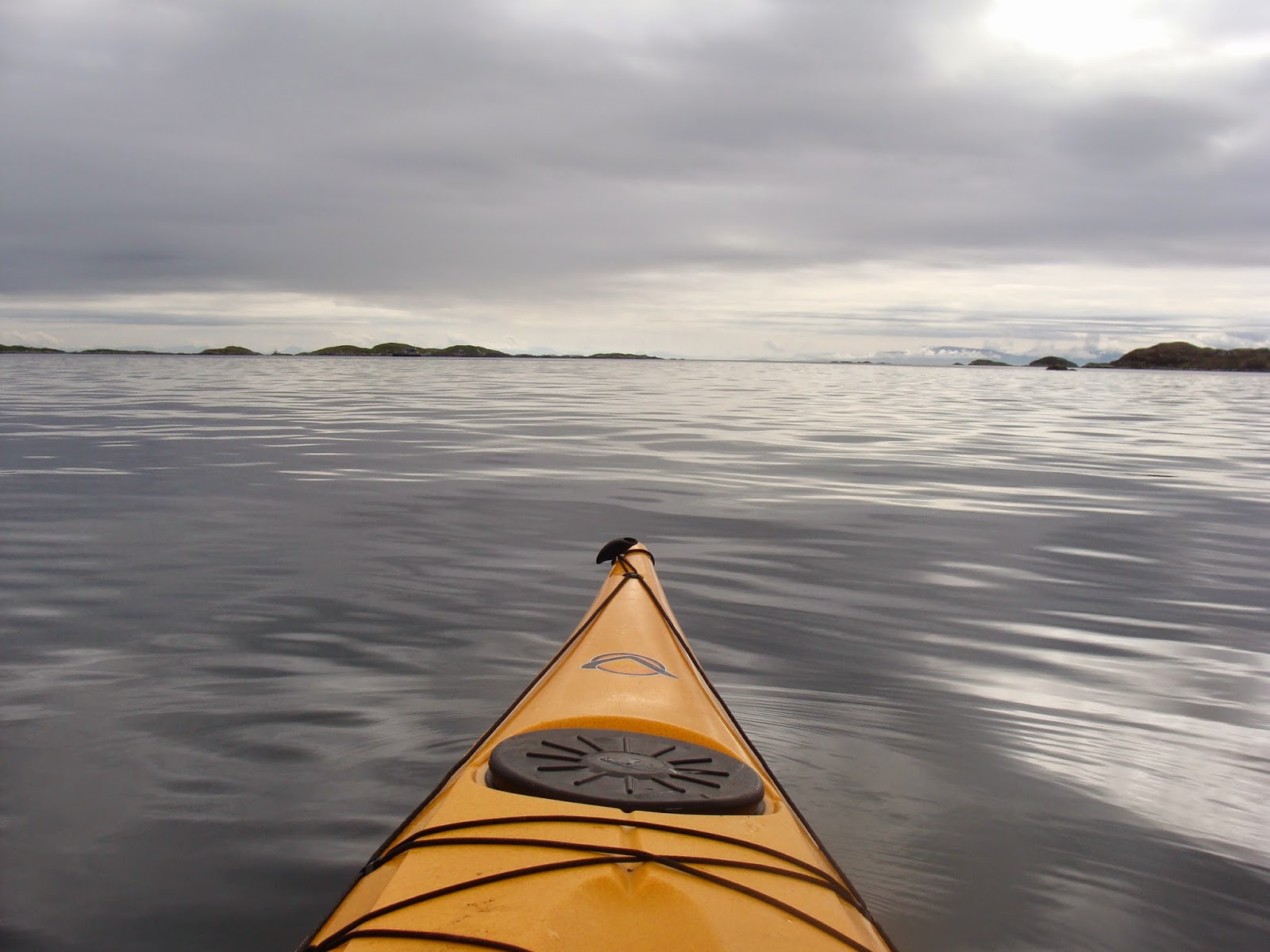
Kayaking on the flat calm bays of East Harris - not far from Loch Needletail (where respects were duly paid)


Arctic skuas chasing terns at Luskantyre beach, Harris.


Thursday, 8 May 2014

Patch notes and Nightingales

Yesterday morning I visited my local patch for the first Breeding Bird Survey (BBS) of the year. This is the 20th year of the British Trust for Ornithology’s BBS survey which is an admirable landmark in UK conservation. Every year a large number of volunteers conduct at least 2 visits to their given 1km square, recording all the birds (and mammals) they see and hear in the vicinity. The result is an important snap shot of local and national bird populations at a key time in the year. Tied in with this data are useful notes on land use, habitats and significantly, changes in habitat.

This is the 3rd year I’ve surveyed this site in North Kent between early May and June and it’s something that I always look forward to. My square has remained largely unchanged in 20 years; open, tilled fields interspersed with a few bushes form the primary landscape, with houses, gardens and a woodland edge filling in one corner. There have been a few subtle changes including a new hedgerow that is now gloriously deep and shrubby as well as two small copses, planted as a result of agri-environment stewardship funds for the farmer. It is remarkable what a difference this small change makes.

It’s been interesting to see what changes have taken place in the last 20 years, since 1994 - the last year a Spotted Flycatcher and Yellowhammer was recorded here in Spring. Numbers of skylarks and corn buntings, the stars of my patch, have remained fairly stable, while starlings have dropped considerably. My great hope is that the pair of Turtle Dove which were recorded for 3 consecutive years from 2002, but not since, will one day return. To my eyes, this landscape could support them, I guess I’ll just wait and hope. A quick scan through the summary of 20 years of data also shows that this unremarkable piece of farmland has recorded 65 species on the BBS survey, not all breeding of course, but it shows how important even a seemingly featureless part of the countryside can be and how important it is we look after it.

 Here is the latest chapter in the survey, as of yesterday between 05:52 and 07:10am. Conditions were good - overcast with some brief drizzle giving to cool, calm morning. The highlight was probably 4 wheatears together in one field, but this was the part where I walk between the transect lines that split my square, so not valid in this instance. It was good to see my first local Swift too and equally heartening to encounter 4 singing Corn buntings and numerous skylarks. It also looks like a good year for whitethroats - calling and displaying from the very areas planted to improve the area for wildlife. And that is rewarding indeed.

BBS visit (1) 2014:

Red-legged Partridge 5
Grey Heron 1
Woodpigeon 22
Collared Dove 3
Swift 1
Green Woodpecker 1
Great Spotted Woodpecker 1
Magpie 1
Jackdaw 1
Carrion Crow 3
Goldcrest 1
Blue Tit 2
Great Tit 1
Skylark 16
Swallow 2
Blackcap 5
Whitethroat 5
Wren 3
Starling 9
Blackbird 5
Song Thrush 2
Robin 8
Dunnock 4
House Sparrow 2
Chaffinch 6
Linnet 1
Corn Bunting 4

I wonder what changes we’ll see to this list in the next 20 years?

Common Whitethroat (Sylvia communis) singing from the same perch as it did in 2013


One bird that is found locally but it is unlikely to make it to my patch is the Nightingale. Writing in the Independent this week, Michael McCarthy recounts an interesting encounter with a Nightingale in Chiswick of all places - but it’s an encounter which we could all be sharing soon:


He is urging the BBC to broadcast the song of the Nightingale on Sunday 18th May - 90 years after they first broadcast it to huge acclaim. I hope they do. With the fate of this declining bird’s single most important UK breeding site (in North Kent) in the balance due to development, it is a song that deserves to be heard.

Tuesday, 29 April 2014

Malta - some thoughts

A pretty amazing thing happened last Friday evening, for a couple of hours it seemed that half the world was talking about a pressing conservation issue. That issue was the annual spring slaughter of migrant birds (including many rare and declining species) arriving in Malta on their long, hazardous journeys to their breeding grounds in the north. It was a surreal thing to witness - a demonstration of unity and passion for a subject that is rightly close to many people's hearts. Of course, I'm referring to the 'tweet storm' (which is apparently quite similar to a 'thunder clap') promoted by the bird lover, naturalist and all-round top bloke, Chris Packham, to highlight the sad events surrounding his trip to Malta. I duly flicked on to twitter that evening, to be met with a solid stream of messages all supporting an end to the #MaltaMassacre. It was pretty cool and there was, in fact, nothing else happening on my timeline.

Skimming through some of the messages, one that particularly stood out for me came from Chris himself who tweeted this horrific statistic:

"Just picked up a book on Malta's breeding birds . 18 regular species . What a disgrace"

A disgrace indeed, and completely unbelievable when you consider that your local park probably has as many breeding species as a sizeable, sun-baked island in the middle of the Mediterranean. The reason for that low number is that the birds are all shot for fun.

There were many more humbling anecdotes shared along with some good banter and some pretty weird bits also (in my opinion). The trouble is, despite feeling encouraged by the response, I felt a little disconnected too. I think that is largely due to the medium used - twitter. I can't help but feel that when it comes to protest, twitter is not an efficient means of communication, it's like clapping with gloves on; it just feels too much like a blur of sentiment, all too quickly washed away.

But perhaps I should be more objective and look at what it achieved. It succeeded in helping Birdlife Malta raise 50,000 euros (and more) to help continue funding their crucial work and it did inevitably send a message to a wider audience - particularly in the UK where there was a considerable amount of newspaper coverage off the back of Chris Packham's quest, aided by his grim but essential improv video bulletins posted to YouTube. I'd like to think also, that it sent a message of support to those Maltese people who'll go to the polls soon to vote in a referendum on spring hunting amidst a climate of intimidation (watch episode 3 of Chris's diaries when the hunters use the police to move honest families of weekend campers off one of the island's few public spaces because it interferes with the hunting!)

I guess it's what happens next that's important now - the part which never inspires me about twitter. They say a tweet has a life span of 9 seconds but hopefully that won't be the case here.

One thing that struck me about the responses was the number of people claiming they would boycott visiting Malta as a direct result of the callous and unsound spring hunting season. Just like protesting via twitter, this is something that I just don't buy as a meaningful long-term solution to the problem. It is a response born out of anger and frustration - and rightly - but to me it misses the point somewhat. Surely, fewer keen and knowledgeable birdwatchers is exactly what the hunters on Malta want and what the long-suffering people want more of. It doesn't feel to me like the economic argument - that of money lost because of fewer tourists - carries much weight either when the protest is fought between nationalist pride and so called 'traditions', and conservation. And from what I can tell, the tourist board have done little more than criticise the efforts of conservationists anyway. Another thing I wondered is that if people are intent on boycotting Malta because of the illegal hunting, then shouldn't they also boycott Cyprus, Italy, France, Spain, Egypt...and for that matter, what about Scotland or Lancashire or...

Everyone's entitled to their opinions but a boycott doesn't work for me. Go there, take photos, get angry and then come home and tell everyone about it. Last autumn, I spent a week in Cyprus, volunteering some of my annual leave with the Committee Against Bird Slaughter (CABS). I spent most of the week feeling tired, stressed and, at times, terrified...not everyone's idea of a holiday (!), but I'd still go back as a birder.

I think what Chris Packham and all those people achieved last week (and continue to do) is nothing less than inspiring, it was good to watch and feels important to be part of - but it will need more than twitter to work and that's down to us.

If you haven't seen any of the courageous and heartfelt videos posted by Chris Packham from Malta last week then you really, really should - here's the link for Episode 1, the rest will be then be listed.

Finally, I've written to my MEP, Peter Skinner, about it, why don't you write to yours on the issue (just don't bother with Farage though, he wouldn't listen...)

Link - 'Malta is a bird hell' 

 A Turtle Dove freed from a limestick trap in Cyprus, October 2013
(its wing was permanently damaged, it will never leave Cyprus)

Friday, 25 April 2014

A Redstart Serenade

Last weekend I fancied a change from the usual scenery and headed over to Thursley Common in Surrey, a site I became quite fond of during numerous mid-winter great grey shrike vigils. Thursley in the cooler months is a formidable place, a creeping Narnia where birds are relatively few - it's always winter but never Christmas. Thursley in spring however is very different, the sweet gorse blooms and the insects' hum portray a fine example of extensive lowland UK heathland.


Walking across the site, it was impossible to miss the fluid, descending songs of tree pipits and the scolding calls of Stonechats. Whitethroats, Willow warblers, Skylarks and more followed. But it was seeking out a strip of deciduous woodland that led my favourite encounter of the morning. It looked like a good spot for redstarts and so it proved, as not more than a minute had elapsed before a small spark of a bird flicked through the trees ahead of me. Glancing up I saw it was a male Common Redstart, a bird I don't see much in my corner of south eastern England. Of all our migrant birds, arriving in spring, I wonder if there are any that come close to matching this bird for beauty - a spritely mix of oranges, blues, blacks, with a smear of dusty white. I watched as it climbed higher into the canopy above me and paused for a moment, before uttering its impression of a forgetful Chaffinch. It's perhaps not a song that matches its visual appeal, but it was still rather lovely to hear nonetheless...


Common Redstart (Phoenicurus phoenicurus), Thursley Common, Surrey, 19/4/14

Friday, 18 April 2014

A very Good Friday


Wheatear (Oenanthe oenanthe), St Mary's Bay, 18/4/14

After a relatively quiet few weeks where bird-related anticipation has well out-flanked reality, the last few days it has finally felt like the cogs of spring migration are grinding into action.

This morning I headed out to St Mary's Bay to do the usual loop of one of my favourite birding locations. Parking at Northward Hill around 7.30am there was little activity around the farm or viewpoint save a few newly arrived common whitethroats, singing their scratchy song from bramble fortresses. Out by the orchard and along to the heronry, it was hard to pick out much above the din of the rooks and gurgling little egrets although both lesser whitethroat and nightingale gave it their all. Down the lane to Swigshole a couple of swallows flew through, otherwise the only other chatter came from the workers in the fields - migrants of an economic kind. Reaching the cottage and the track out north, I decided to do the loop anti-clockwise so as to have the sun and the surprisingly cool breeze behind me when I reached the sea wall. Before I reached the bay, I was pleased to find a nice flock of seven wheatears together in the corner of St Mary's marsh. Mediterranean gulls were also plentiful here, their calls swirling overhead, somewhere in the wide expanse of blue sky above me.

Heading out to the bay, I couldn't find any yellow wagtails with the cattle but I was surprised to find another birder out on the bay - but then I'm always surprised to see anyone else here! Unfortunately the chap had decided the best way to get a better view of the river was to climb over a fence and walk across the salt marsh - all for the sake of being about 20 metres closer - nevermind fieldcraft and the meadow pipits scattering from his path. Anyway...a distant flock of Brent geese were a nice reminder of migration's revolving door  - and those winter birds heading for the exit. A single Whimbrel pottered on the large expanse of mud in the bay, along with a single Avocet and smaller crowds of redshank and oystercatcher. Heading round towards Egpyt Bay were two more obliging wheatear and a Yellow Wagtail which flew over and landed briefly on the beach.

I took my time on the track back to Swigshole, admiring a pair of Marsh harriers and trying to coax something nice out of the bushes, a gropper maybe...but a couple of Cetti's was as much as I got. I did however spot perhaps the most unexpected bird of the day though - a single Fieldfare close in on one of the rspb fields! It is undoubtedly my latest record for the species...

Around this point I was starting to zone out a bit and muse on the fact that things still seemed pretty quiet when several blackbirds flushed off the path ahead of me. Their alarms stirred me slightly and I became aware of a much more nasal sounding call with them. Scanning the memory bank, I followed their flight and was chuffed to see a Ring Ouzel flying across one of the paddocks by the cottage. The bird perched on low bush first before dropping to the ground and foraging along the fence line, some 50m away, for a couple of minutes - showing off it's superb white crescent breast band. It's always great to see these birds and to find one here felt good. Incredibly, just a moment after the ouzel disappeared from view, I spotted a large, greyish bird moving along the adjacent hedgerow towards me, slightly obscured. My instinct was that it must be a female sparrowhawk cruising for some brunch but when I moved to get a better view I was stunned to see a ring-tail Hen Harrier fly right over me! Incredible! The bird quickly disappeared over some scrub and then presumably headed off over towards the Decoy fields.

Ring Ouzel (Turdus torquatus) nr Egypt Bay, 18/4/14

After that unexpected burst of action, I was buzzing again and enjoyed a walk through the bluebells at Northward Hill before heading home. I hope it's not too cheesy to say today was a very Good Friday!

Sightings of note today:

Northward Hill:
Garganey (drake on res), 14 Avocet (Swigshole fields), 1 Buzzard, Cuckoo (1 heard), 5 Swallow, 1 House Martin, 2+ Whitethroat, 3 Lesser Whitethroat, 6+ Nightingale, Willow Warbler (singing), 5 Jay, 3 Stock Dove

St Mary's bay/Egypt Bay:
Ring Ouzel (1m by Swigshole Cottage), 29 Brent Goose, 6 Tufted Duck, 1 Whimbrel, 1 Avocet, 3 Marsh Harrier, 1 Hen Harrier (rt), 20+ Mediterranean Gull, 9 Wheatear, 1-2 Yellow Wagtail, 1 Sedge Warbler, 2 Cetti's Warbler

Spring is 'ear!

Monday, 14 April 2014

Can you hear the nightingales sing? (Part 2)

Last year I wrote a blog about Lodge Hill - a miraculous chunk of north Kent's rural landscape on the Hoo Peninsular that is home to the Nightingale, a rare breeding bird - and how it could all disappear.

A year on, some things have changed but one thing hasn't - the developers, Land Securities still want to build 5000 homes on the site. This will equate to a potentially catastrophic loss of wildlife on a local (and national) scale. Medway Council recognised it wasn't right and withdrew their plans, Land Securities on the other hand, simply went away and came back in March this year with revised plans which look remarkably like their first.

Tomorrow is the deadline for the current public consultation, so if you have time, please respond and object to this wholly damaging and inappropriate development.

Why is it important? See this post from 2013

Submitting your opinion is easy - it takes 2 mins (because I've written the answer below!)

- Click here to comment through the Medway planning page:

- Click the button saying you do not have a reference number

- fill in the deets and pick your fave bits from the following, or write your own:

I strongly object to the revised Lodge Hill planning application on the following grounds:

1. Lodge Hill has been recognised as a Site of Special Scientific Interest by Natural England, the government’s expert advisors on the natural environment. This is in recognition of the site’s critical importance for nightingales, a migrant bird greatly declining in the UK. The 2012 BTO survey showed the area to hold 84 pairs of Nightingale – with 69 inside the boundary directly affected by development. This total amounts to 1.3(+)% of the national nightingale population. As such it is likely the single most important breeding site for this bird in Britain.

2. The site has considerable biodiversity value: Bat roosts have been recorded present in 19 structures, with several species of bat foraging on site. The site is likely to be of at least county importance for bats. Populations of great crested newts, toads, lizards, slow worms, grass snakes and adders are present. The site is at least of county importance for reptiles.

3. The cumulative impact of the proposed development has still not been recognised in any form. The revised application hugely underplays the additional infrastructure features needed (roads, drainage, sewerage, power) which will, without question, contribute to further damage of habitats in the area. Likewise, it is entirely inevitable that an influx of people to the area on this scale will have a permanent negative impact on the ecology and rural character of the area as a whole.

I find it absurd and downright disturbing that a site proven to be of significant ecological value on a national scale is being treated in this way. When the plans were proposed initially, little was known about the value of this site. What has now been proven is that this is a unique site for nature in the UK. These plans set a tragic example for children today and the generations to come, on our relationship with the environment. Lodge Hill is a key part of the landscape of North Kent and should be preserved without hesitation for the future prosperity and enjoyment of local people, visitors and wildlife.

For these points and more I remain thoroughly opposed to these plans.