Cooling Marshes, Kent, 7th December 2014

Thursday, 24 July 2014

Howlin' Fling! Isle of Eigg, July 2014


It seems that barely a month passes these days without me visiting some achingly beautiful corner of Scotland, this was my fourth trip in under a year; how I've grown used to the unnerving jolts of sleeper carriages in the night and the efficient hum of CalMacs. So it was this weekend as myself and a few others headed north once more, this time to the majestic Isle of Eigg, nestled between Rum and Mull on the west coast. Unlike previous trips, wildlife or wilderness was not the driving factor here, in fact 'FUN' (and therefore not necessarily birding) was the party line I was given before we left, rather it was the promise of seeing some great bands, drinking, dancing and generally having an amazing time - all courtesy of the great folk behind (Eigg-based) Scottish independent record label Lost Map Records and the 3rd 'Away Game' mini-fest, this time out christened 'Howlin' Fling'.

And have an amazing time we did. Of course I still found time to explore the island and my surroundings, anything less would be plain foolish. I found Eigg to be a charming place and had a great time birding its heathery slopes and rocky shores between splendid bouts of gaelic rap, glorious noise, swooning, drinking and yes, howling.

Meeting the aptly named Shearwater from the train in Arisaig harbour on Thursday, the hour-long crossing to Eigg bought a scattering of seabirds including singles of Kittiwake, Puffin, Gannet and two Razorbill, while the rocks around around Arisaig harbour hosted numerous common seals. An interesting mid-channel sighting was of a small flock of Golden plovers that arced low past the boat and off to the south west. Nearing the small jetty at Galmisdale, Black guillemots were fairly conspicuous and a few Eider nursed young in the shallow and muddy inner harbour.

Pitching our tents on a low, grassy headland a short walk from the harbour afforded nice views of the Sound where several dozen Arctic terns from a nearby colony squawked and swooped endlessly during our stay. A pair of hooded crows kept an ever watchful eye on the pretty harbour and more than once I heard common sandpipers shrieking somewhere nearby. With the sun out and the music not kicking off until the Friday, we took a walk along the cliffs to the west and a path that led to the Massacre Cave. It was nice to find a single Grayling butterfly here, a species that is largely absent from my local area. Meadow pipits called throughout and a few crossbills and Spotted flycatchers flicked around the pine woods lining the path from the 'village'. Near the cave was a single juvenile Wheatear and a small flock of rock doves. The cave itself was spectacularly eerie, requiring some agile shuffling on knees to access, with the darkness inside lending weight to its reportedly tragic history. But it is a GREAT name for a metal band at least.

With no metal in sight sadly, the Thursday night headline slot was seized by a pod of common dolphins that swam into the small channel by the pier and gave incredible views to those assembled on the little terrace of the tea room/bar overlooking it. They swam and breached down to 20m at times, causing a little crowd to gather in appreciation on the rocks - undoubtedly the best views I've ever had.

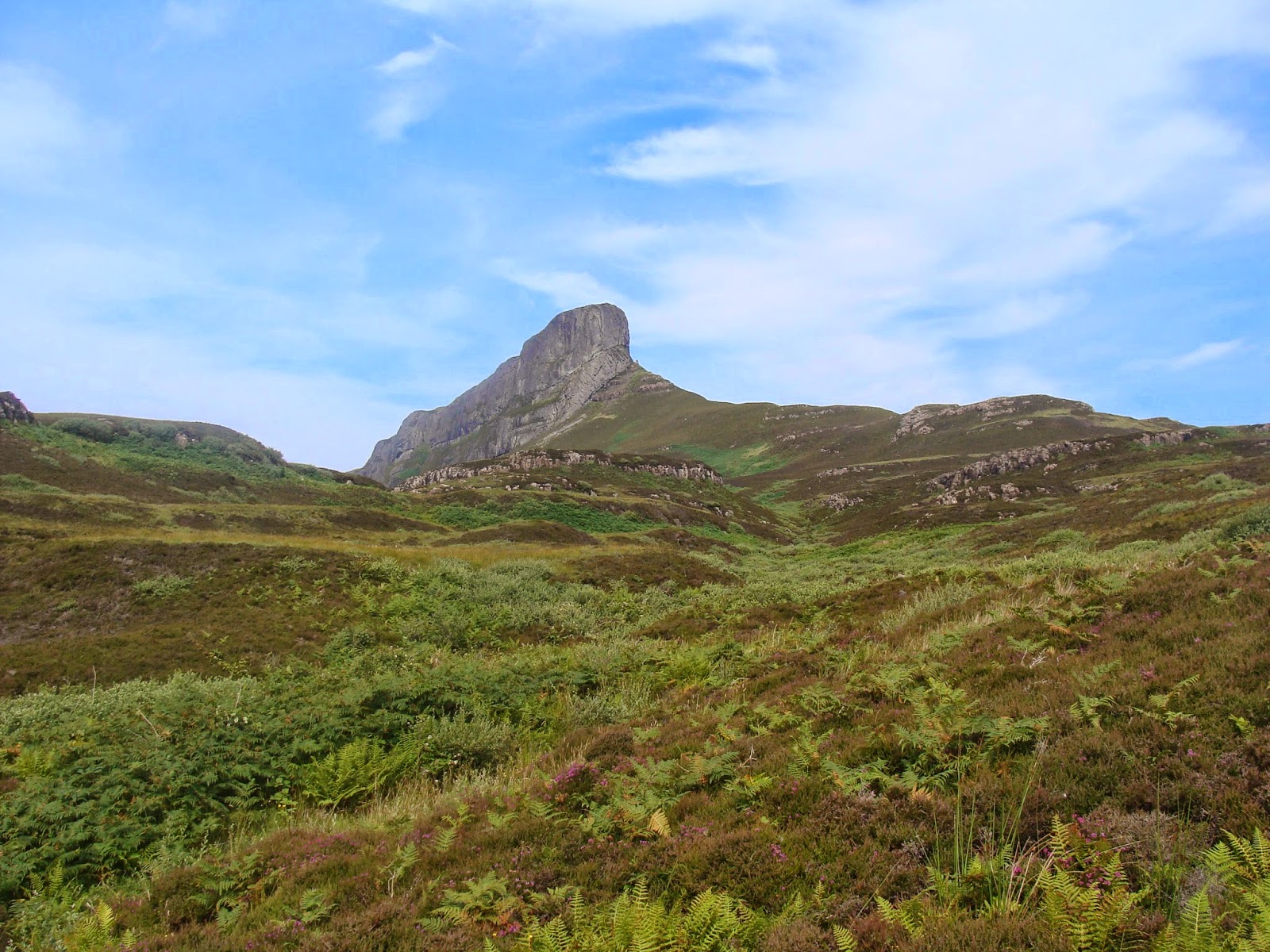
Friday started with an hour watching the sound from the new harbour wall with Manx shearwaters in mind. Happily it paid off and, although distant, the distinct low, gliding flight pattern revealed a steady passage of birds and some small flocks gathered on the water. Following breakfast, an assault on the imposing peak of An Sgurr that towers over the island like a sinister basalt dorsal fin was planned and we headed up the steep path to the accompaniment of Ravens kronking overhead. They lurked at the top too as we ate a victorious picnic, gawped at the incredible view, played 'Name that Island' and took selfies (naturally). But aside from the view, the morning belonged to a ringtail Hen Harrier that gave good views as it cruised over a nearby slope. To see these stunning birds on a bleak marsh in winter is special but to see them glide over purple-studded heather on a summer's day in a landscape as right as this is breathtaking.

With some great birds on show, it was perhaps fitting that the lines were blurred somewhat when it came to the festival line up. This is why I spent an hour or so on Saturday watching a Woodpigeon duel it out with a parliament of eagleowls - with the result being closer than you might expect. Then there was an encounter with a WOLF too which wasn't actually the least bit frightening, in fact it was kind of beautiful. It's testament to the organisers' vision and good taste that every band I saw bought something to the weekend and contributed to the spirited atmosphere with simply great performances. Sorry to go a bit Buzzfeed but off the top of my head stand outs included - Sam Amidon, Johnnie Common, The Pictish Trail, Meursault, SeaZoo, Jens Lekman, local band Metta and the two guys playing in the Ceilidh Hall on Sunday afternoon that we we stamped and clapped along too. Look them up. This is how music festivals should be done.

Then all too soon it was time to leave again. There was just time on Monday to cycle down to the beautiful singing sands at the other end of the island where a couple of Whinchats hopped among the scrubby croft margins and some kestrels bounced on clifftop gusts. On a high ledge on the shear rock cliff that surrounded us I'm sure I saw a Golden Eagle alight briefly too. Packed into the Shearwater for the return trip there was a heartwarming cheer for the organisers and residents waving us off before we crossed back to Arisaig. The water was flat calm under the hot sun and quiet as a result but still a couple of harbour porpoises appeared briefly and two superb Great skuas pitched off the glassy sea and flew past. I thought that would be it for the trip but there was one more highlight to come. Sitting sleepily on the train, not far out of Arisaig, I perked up momentarily as the train veered into the open and ran adjacent to a large loch. It was just in time to see a summer-plumaged Black-throated Diver sat on the water! What a beast. It was a blink and miss it moment and it felt quite surreal, but it was a great way to end a fantastic few days.

Campsite, Eigg, 17/7/14

An Sgurr, Eigg, 18/7/14

Dolphins! Come on! Galmisdale, Eigg, 17/7/14


And some footage with bonus great commentary (!):


Dolphin crowd

Meursault in the Marquee - f'in Yes! Eigg, 20/7/14

An Eagleowl takes flight - nearly. 

Whinchat (Saxicola rubetra) at Cleadale, Eigg, 21/7/14

Awesome beetle in the grass by our tent - ID  suggestions welcome

Rum rising - from the Singing Sands, Eigg, 21/7/14


Thanks to Johnny and everyone. KS, sorry for stealing your joke :)

Monday, 14 July 2014

London Paramount: Round 1


The photo above (taken from a display panel)  shows the extent of Swanscombe Marshes as they fan out into the Thames in North Kent. This is the site of a massive development proposal by London Paramount for a vast theme park and entertainment 'resort'. I am thoroughly opposed to this idea on environmental grounds so took the opportunity to attend a public consultation in Greenhithe on Friday. This is just a quick post with a few notes I took but I'm sure I'll mention it again in the future.

The consultation in the British Legion Hall was the usual affair - 6 display panels, a few spokespeople, a table of forms to fill in and a car parking free for all outside. The panels laid out the very basics of the proposal which at this stage mostly amounts to a lot of big numbers:

  •  27000 jobs
  • 2 bn investment
  • 200 new businesses
  • 15-18m visitors annually

And that was it really, other than numerous reminders that this is a project of 'national importance' (it's an NSIP or Nationally Significant Infrastructure Project). The main aim of the consultation was to determine how local people wanted to be consulted. It laid out a 4 stage programme of events, up to next summer, in which we apparently have a chance to make our opinions count. 

Unsurprisingly, there was no mention anywhere of the marshes, so I found one of the few reps present. There was a good turn out and a dozen others were doing the same. The majority were concerned about the traffic and infrastructure implications of the development which is pretty understandable. There was talk of the Thames Crossing and whether the proposed development will have an impact on the decision ("no"). I raised my concerns about the impact on wildlife on the site and the huge loss of green space in an already impoverished area. I was told that the boundary indicated on the map (encompassing the entire site) was not intended to show the full, developed area, rather the 'planning limit' for inspectors. Great, not very reassuring at all. In addition the rep said that "some marshes will remain" and pointed out that they'd be "stupid to build right up to the river". Ok, but on a floodplain? Uh... There was an invite to attend a future session with the ecologists undertaking the EIA at the moment before the thread unravelled with a comment about how land of poor quality could be enhanced? But of course, land doesn't necessarily have to be 'quality' to have ecological value.

And that is the sad thing about Swanscombe Marshes. For the majority it is a waste ground, this Kent Messenger article describes it as "derelict", but that couldn't be further from the truth. The first time I visited the site a couple of years ago, on a curious foray around my local area, I was blown away. I remember smiling to myself at the luck of discovering the site, a scruffy, imperfect oasis, nestled between the river and the miserable suburban sprawl. Wheatears popped up on the odd ruined structures, Cetti's warblers blasted away in reeds sprouting from murky ditches and linnets, skylarks and more flushed from the rank grassy areas. Overlooked and left for nature to do what it does, it is almost certainly full of pleasant surprises and is precisely the kind of site that urban areas need. 

Look at that image above again.

Here are a few more recent ones from July 2013 (thanks to RK):


Recent sightings on Swanscombe marshes include 8 Little egrets, 9 Lapwings (inc some nearly fully grown young), 3 adults & 1 Juvenile Cuckoo, Lesser Whitethroat, Whitethroat’s, Cetti’s, Chiffchaff, numerous Reed Warblers, Skylarks, 5 Herons (2 Juveniles)

 The site also holds Adder and Common Lizard. (Again, thanks to RK for this info)

Despite the ongoing need for jobs, the proposed plans for Swanscombe Marshes show the cynical profiteering at the heart of so much planning policy today along with a dramatic misunderstanding of what is actually needed. Is a theme park, car parks, roads and yet more shopping complexes what this heavily pressurised corner of the country really needs? A development on this scale will impact negatively on tens of thousands of people on both sides of the river. As it stands, it will irrevocably wipe out a local wildlife haven - one that might look derelict but is far from it. 

This article summarises a lot of information, it also points out that one of the main landowners involved is Land Securities - remember them?

More detailed information on the planning application will be available in October.


Thursday, 3 July 2014

Mr Happy

I wish I'd taken my camera out tonight, the fields looked majestic in the sunset. But a camera wouldn't have done any justice in truth; no strong scent of honeysuckle as it laces up the hedgerow nor the warmth emanating from the feint and dizzy heads of wheat. The occasional clanking of the sprinklers straddling the rows of spring onions would instead be replaced with a generic image of modern lowland agriculture today.

There'd be no clip of the dragonflies' wings as it steamed past me and certainly no record of the two yellow wagtails skipping above the now substantially bushy potato field. I lucked on to these birds as I scanned the field idly, actually more engrossed by how previously invisible insects were now catching the light as they darted this way and that, like fireflies. But the birds appeared and darted across my view, alighting on the dark leaves, absolutely golden in that light.

Yellow wagtails don't breed on this site (although I'm sure they do in the wider vicinity) so it seems that autumn has begun. If there was any doubt of that, a minute later two swifts charged through the sky towards me and carried on determinedly past, sailing on, the south calling.

Walking back, a large dog with a glossy coat bounded towards me, closely followed in a less enthusiastic fashion, by an ageing, tall, thin chap in shorts and baggy t-shirt. The shirt was one of those ones with a big, grinning Mr Men character on - in this case, Mr Happy. I didn't suppose he'd bought it himself, but then really, I guess, that's not the point.

Thursday, 26 June 2014

Nightjarring

NW Kent, June 2014

I am alone in a forest clearing at dusk. It is quite plausible to think there is no one else around for a mile in either direction; it could even be that the blinking lights of the slowly groaning planes streaking over head are the closest thing I have to human company at this point.

But there are signs of a presence here. Across the clearing in front of me are the stubby shoulder-height tufts of coppiced sweet chestnut trees and, in the corner, a pile of machinery waits quietly next to the coppiced trees latest incarnation – a neat stack of sharpened fence posts. This is a working forest like many used to be. It partly explains why I’m here now.

From my vantage point in the middle of the large clearing I can see the line of trees, living and already fence-like, encircling me. Or rather I can pick them out against the sky - a ghostly shade of blue and dimming quickly. There is no wind to distort the scene and so a dusk chorus, that overlooked lament, resounds with the same fervour of a dawn. A bold, shrieking song thrush nearby is the undisputed winner and has its song echoed by another some distance away. Robin and Blackbird chime in too. High overhead, unseen, a party of swallows chatter by like late-night revellers. Otherwise the only sound I can discern is the occasional patter of moths as they flick against my jacket. I don’t know why they’re doing that.

And then in the half light, I spot some movement to my left. Silently, a smallish, long-winged shape glides from one of those chestnut stools and descends effortlessly to the ground, out of sight (and out of sheer chance) only 20 metres away. Though a fleeting glimpse, there is enough light to make out some subtler features of the bird, chiefly its mottled colouring and distinct shape.

Then it starts, a sort of gurgling sound, like a small engine ticking over. For a second I can’t work out if it is a sound carrying from miles away, but then I realise I am very close and this is akin to listening to a warm up behind closed doors. After several minutes there is a further flurry of movement – there are two birds – but I can only follow the path of one as it glides off towards the trees on the far side.

“Uuuuuuuuuuuuuuurrrrrrrrrrrrrrrrrrrrrrrrrr errrrrrrrrrrrrrrrrrrrrrrrrrrrrrrrrrrrrrrrrrrrrrrrrrr”

Over the next 20 minutes the sound continues, at first like a door creaking open, then an unearthly hum. It moves around invisibly in the near-darkness and reveals two males sparring from different sides of the vast clearing. I can see the silhouette of one perched in a tree some distance away. Then, I have a strange feeling that something has brushed past me or that there is something near me, I’m largely helpless to determine what, until I glance up and stare straight at the outline of a Nightjar hovering just feet from my face. It is an incredible moment and I sort of gulp with equal parts surprise and delight. There is a moment as it moves and whatever pale light is left flicks across, illuminating it - and I think it’s something I won’t forget for a long time.

Read about this fascinating bird here

Friday, 13 June 2014

Stilts!

In another poor week for environmental news it's nice to have something to cheer, however small it may be...in this case small, fluffy and awkward looking. It was great to hear the news today that at least two (out of three) pairs of Black-winged Stilts have successfully hatched young - the first in the UK for 27 years. One of these sites is Cliffe Pools - a favourite local site of mine, which makes it that bit more special perhaps. On one of my first ever 'birding' trips abroad, to Portugal a few years ago, Black-winged stilts were the bird that caught my imagination most as they strode elegantly around some Algarve saltflats. On that occasion I watched a nesting pair too and was struck by their diligence and care, and their defiance in the face of prolonged mobbing by gulls. It's always stuck with me. So to have been able to watch something similar unfold here is great and if you get a chance to go and have a look you should.

Of course there is still some way to go, in reality life just got harder for those birds but fingers crossed that in a few weeks we'll have several more gangly and beautiful reasons to be cheerful.

Black-winged Stilt, Cliffe Pools RSPB, (Himantopus himantopus) 24/5/14

Well done (and thanks) to the RSPB staff and volunteers who worked all hours to help them get this far.

Friday, 30 May 2014

Postcards from the Outer Hebrides, May 2014


"It's easy to be lulled by the harsh poetry of the crofters' lifestyle, the community's lilting dialect, their love of music and the aesthetic possibilities of spun wool..." 

Mark Cocker, 'Birders - Tales of a Tribe'

It's never much fun coming home from holiday is it? The last few days have certainly been a struggle, rushed from the relative calm of Inverness, via the Caledonian Sleeper, to a Euston station morning rush hour. But it was my decision to head straight back to work with minimal sleep so I have no one else to blame. London is a long way from the Outer Hebrides but it seems even further away now after the ten fantastic days we had hopping through the islands recently.

Travelling south - north, from Barra and Vatersay to Tarbert on Harris, via the Uists and Berneray, revealed a series of fascinating islands, each steeped in history and spoiled with some of the most mesmerising wild landscapes I have ever seen. Mountain, dune and machair, at times they seemed just strides apart. And the Beaches, the white sand and turquoise waters - imagine an overcast day in Thailand with ringed plovers where the tourists would be and 30mph winds perhaps. Glorious in other words.

Of course the birds were great too and a steady diet of MaCleans macaroni pies meant I explored a lot and had some memorable encounters along the way. Unfortunately those encounters did not stretch to the Snowy Owl at Solas as I got the news too late, but you can't win 'em all. We did eventually pass that way, but only to meet with the worst of the trip's weather which was otherwise pretty good. It's hard to find a Snowy Owl when you can barely stand for the wind and can taste the sand in your mouth. We did manage to see, eventually, another Hebridean speciality though. Hearing that 'crex crex' sound for the first time in an overgrown front garden on Barra was a nice moment - that sound belonging to a Corncrake, less a bird, more a jarring 'song' wrapped in a riddle. That noise followed us places, unseen, until the last day when we got lucky and passed a garden from which a bird flew up briefly then disappeared, looking as surprised as I was. Looking at the map of the Corncrake's rapid and systematic decline across the British Isles on the wall in the Balranald RSPB visitor centre was as stark and sad reminder as there could be of the importance of mending our ways with our landscape. Other highlights included numerous Golden eagles, especially around Harris, Short-eared Owl, Twite, ubiquitous Arctic terns and the acrobatic (and brilliantly close) Arctic skuas chasing them. It was great to see large numbers of dunlin and ringed plovers on their breeding grounds for a change, instead of a Kentish mudflat shrouded in winter mist. Likewise, it was interesting how relatively commonplace cuckoos were, with willow warblers topping the charts for migrant passerines.

All in all, it was an amazing trip and thoroughly recommended. I look forward to going back one day, but for now, here are a few photographs...


If there's one thing better than the scallops and chips from the fish bar on the main street in Oban, it's the confiding black guillemots (Cepphus grylle) in the harbour...


The chapel at Howmore, South Uist. We stayed in a traditional 'blackhouse', now a small bunkhouse, just to the left. The machair teemed with bird life and the sounds of drumming snipe at dusk confused some of the other guests!


Well you've gotta move your cattle somehow - photo taken from the back of the Royal Mail Post Bus no less. We saw a LOT of post boxes on this trip.


More usually seen in drab winter plumage on in-land gravel pits and reservoirs in the south, a summer-plumaged Great Northern Diver (Gavia immer) is an all-together different beast. A velvet-black head and a back that could be marked with constellations, they were a common sight from the beaches.


I had never heard a Wheatear (Oenanthe oenanthe) sing before this trip. Front of the queue in the looks department but late for a song, it was nevertheless nice to hear the quiet, Stonechat-esque warbles trickling down the hillsides.


Peat cutting by Loch Druidibeg, South Uist.


Traigh Lar at Balranald RSPB, North Uist.


Somewhere on Berneray - the smallest island we visited but one of my favourites.


The sheep of North Uist have voted.


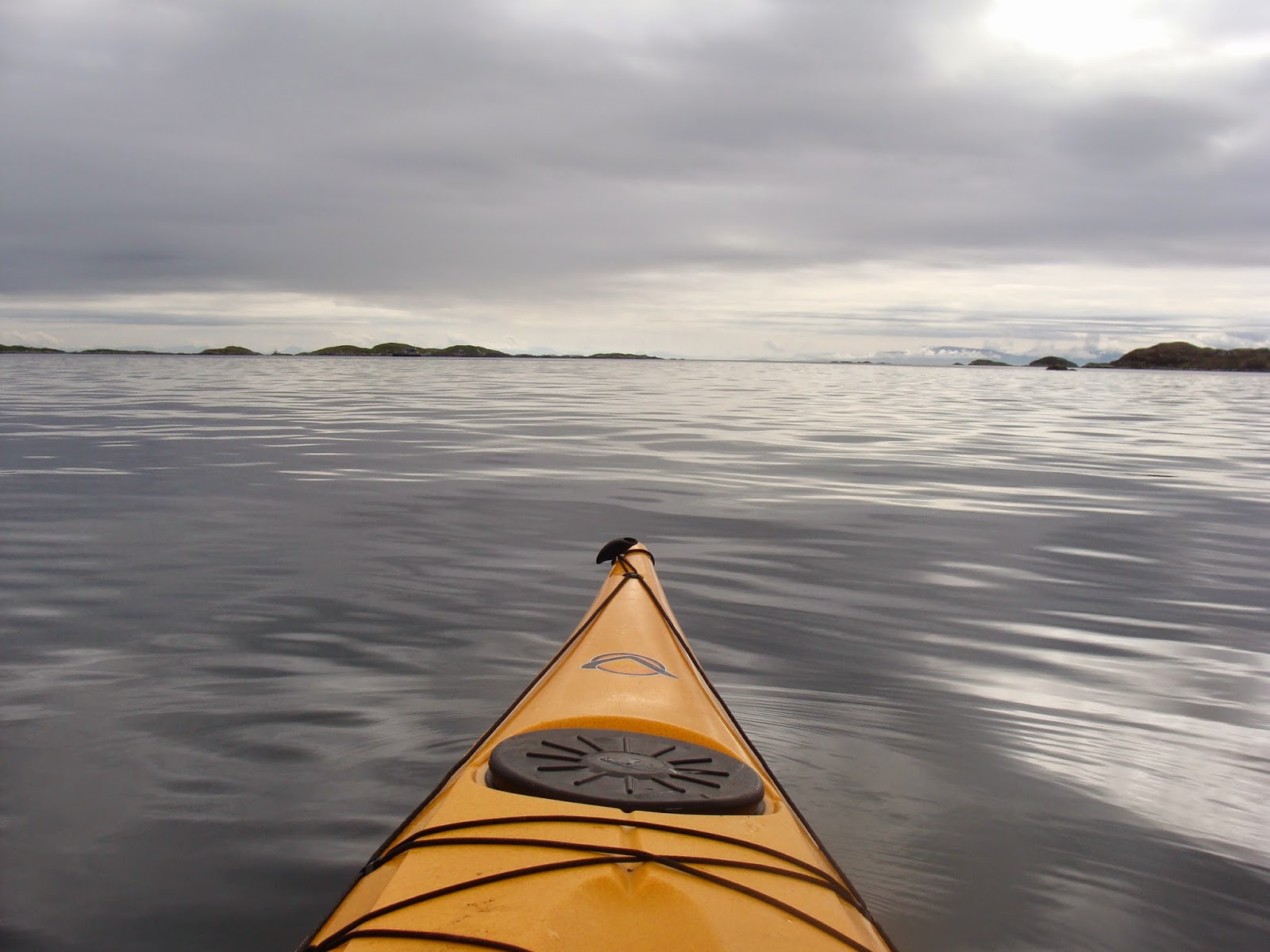
Kayaking on the flat calm bays of East Harris - not far from Loch Needletail (where respects were duly paid)


Arctic skuas chasing terns at Luskantyre beach, Harris.


Thursday, 8 May 2014

Patch notes and Nightingales

Yesterday morning I visited my local patch for the first Breeding Bird Survey (BBS) of the year. This is the 20th year of the British Trust for Ornithology’s BBS survey which is an admirable landmark in UK conservation. Every year a large number of volunteers conduct at least 2 visits to their given 1km square, recording all the birds (and mammals) they see and hear in the vicinity. The result is an important snap shot of local and national bird populations at a key time in the year. Tied in with this data are useful notes on land use, habitats and significantly, changes in habitat.

This is the 3rd year I’ve surveyed this site in North Kent between early May and June and it’s something that I always look forward to. My square has remained largely unchanged in 20 years; open, tilled fields interspersed with a few bushes form the primary landscape, with houses, gardens and a woodland edge filling in one corner. There have been a few subtle changes including a new hedgerow that is now gloriously deep and shrubby as well as two small copses, planted as a result of agri-environment stewardship funds for the farmer. It is remarkable what a difference this small change makes.

It’s been interesting to see what changes have taken place in the last 20 years, since 1994 - the last year a Spotted Flycatcher and Yellowhammer was recorded here in Spring. Numbers of skylarks and corn buntings, the stars of my patch, have remained fairly stable, while starlings have dropped considerably. My great hope is that the pair of Turtle Dove which were recorded for 3 consecutive years from 2002, but not since, will one day return. To my eyes, this landscape could support them, I guess I’ll just wait and hope. A quick scan through the summary of 20 years of data also shows that this unremarkable piece of farmland has recorded 65 species on the BBS survey, not all breeding of course, but it shows how important even a seemingly featureless part of the countryside can be and how important it is we look after it.

 Here is the latest chapter in the survey, as of yesterday between 05:52 and 07:10am. Conditions were good - overcast with some brief drizzle giving to cool, calm morning. The highlight was probably 4 wheatears together in one field, but this was the part where I walk between the transect lines that split my square, so not valid in this instance. It was good to see my first local Swift too and equally heartening to encounter 4 singing Corn buntings and numerous skylarks. It also looks like a good year for whitethroats - calling and displaying from the very areas planted to improve the area for wildlife. And that is rewarding indeed.

BBS visit (1) 2014:

Red-legged Partridge 5
Grey Heron 1
Woodpigeon 22
Collared Dove 3
Swift 1
Green Woodpecker 1
Great Spotted Woodpecker 1
Magpie 1
Jackdaw 1
Carrion Crow 3
Goldcrest 1
Blue Tit 2
Great Tit 1
Skylark 16
Swallow 2
Blackcap 5
Whitethroat 5
Wren 3
Starling 9
Blackbird 5
Song Thrush 2
Robin 8
Dunnock 4
House Sparrow 2
Chaffinch 6
Linnet 1
Corn Bunting 4

I wonder what changes we’ll see to this list in the next 20 years?

Common Whitethroat (Sylvia communis) singing from the same perch as it did in 2013


One bird that is found locally but it is unlikely to make it to my patch is the Nightingale. Writing in the Independent this week, Michael McCarthy recounts an interesting encounter with a Nightingale in Chiswick of all places - but it’s an encounter which we could all be sharing soon:


He is urging the BBC to broadcast the song of the Nightingale on Sunday 18th May - 90 years after they first broadcast it to huge acclaim. I hope they do. With the fate of this declining bird’s single most important UK breeding site (in North Kent) in the balance due to development, it is a song that deserves to be heard.